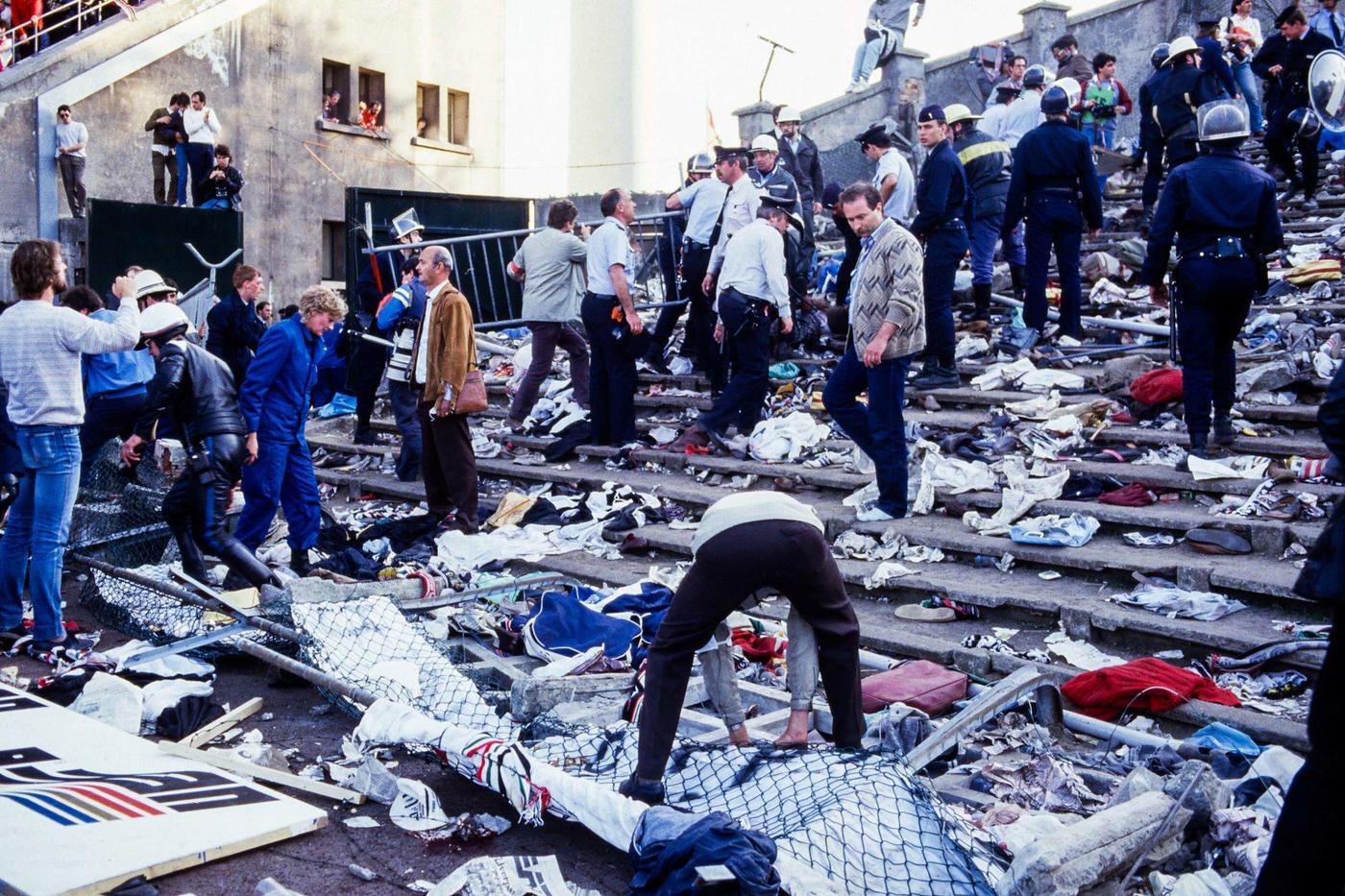
Rubble, torn clothing, and twisted fencing spill across the terraces at Heysel Stadium, turning what should have been a stage for the European Cup Final in 1985 into a stark landscape of shock and aftermath. The stands previously occupied by Juventus supporters sit eerily emptied, while scattered belongings and broken barriers suggest the sudden panic that swept through the crowd. In the background, the concrete structure looms close and confining, emphasizing how quickly a sporting enclosure can become a trap.
Across the steps, police and officials move carefully through the debris, their presence conveying both urgency and disbelief. Small clusters of onlookers appear along the upper edges and near openings in the wall, drawn to the scene yet separated from its worst damage. The photograph’s cluttered details—discarded scarves, jackets, and personal items—make the absence of fans feel louder than any chant ever could.
Taken in the shadow of the Heysel Stadium disaster, this image belongs to the visual record of a tragedy that left 39 dead and forced football to confront safety, crowd control, and the consequences of failing infrastructure. For readers searching the history of the European Cup, Juventus fan terraces, or the Heysel Stadium tragedy, it offers a sobering, ground-level view of what remained when celebration collapsed into catastrophe. More than a sports photo, it is a reminder of how a single night reshaped stadium standards and the collective memory of European football.