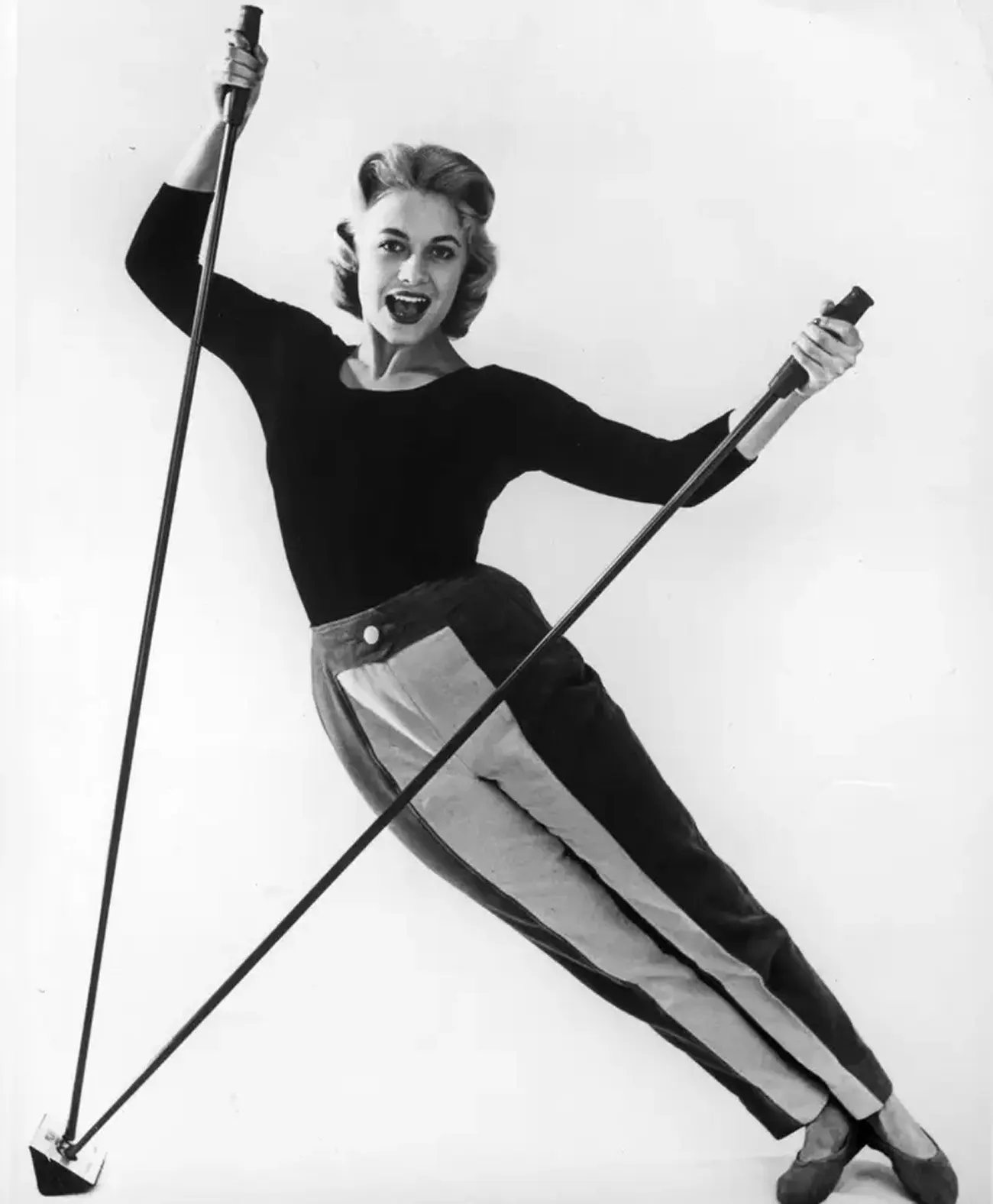
Leaning at a dramatic angle, a smiling demonstrator grips two long poles that seem to anchor to the floor, turning a simple studio backdrop into a stage for athletic spectacle. The outfit—sleek top, high-waisted pants, and tidy hair—signals the era’s polished idea of “modern fitness,” where looking composed mattered almost as much as breaking a sweat. In one frozen moment, the body becomes a moving line, stretched and braced as if the apparatus itself is coaxing balance, strength, and flexibility all at once.
Called the Las Picas, this late-’60s exercise device promised a full-body routine through controlled contortions: pull here, lean there, and let leverage do the rest. The photo’s clean composition highlights the machine’s selling point—simplicity—while the pose hints at its challenge, asking the user to trust their grip and core as their weight shifts off-center. It’s equal parts workout and performance, the kind of contraption that would have looked right at home in a living-room fitness craze or a glossy magazine spread about the newest training method.
For anyone fascinated by weird exercise machines and workout methods from the past, Las Picas offers a snapshot of how quickly fitness trends can reinvent themselves. Before today’s resistance bands and functional training buzzwords, there were devices like this—minimalist, theatrical, and big on promises—designed to make movement feel novel. Look closely and you can almost hear the pitch: a few minutes a day, a little daring, and you too could bend “every which way” into a stronger, sleeker version of yourself.