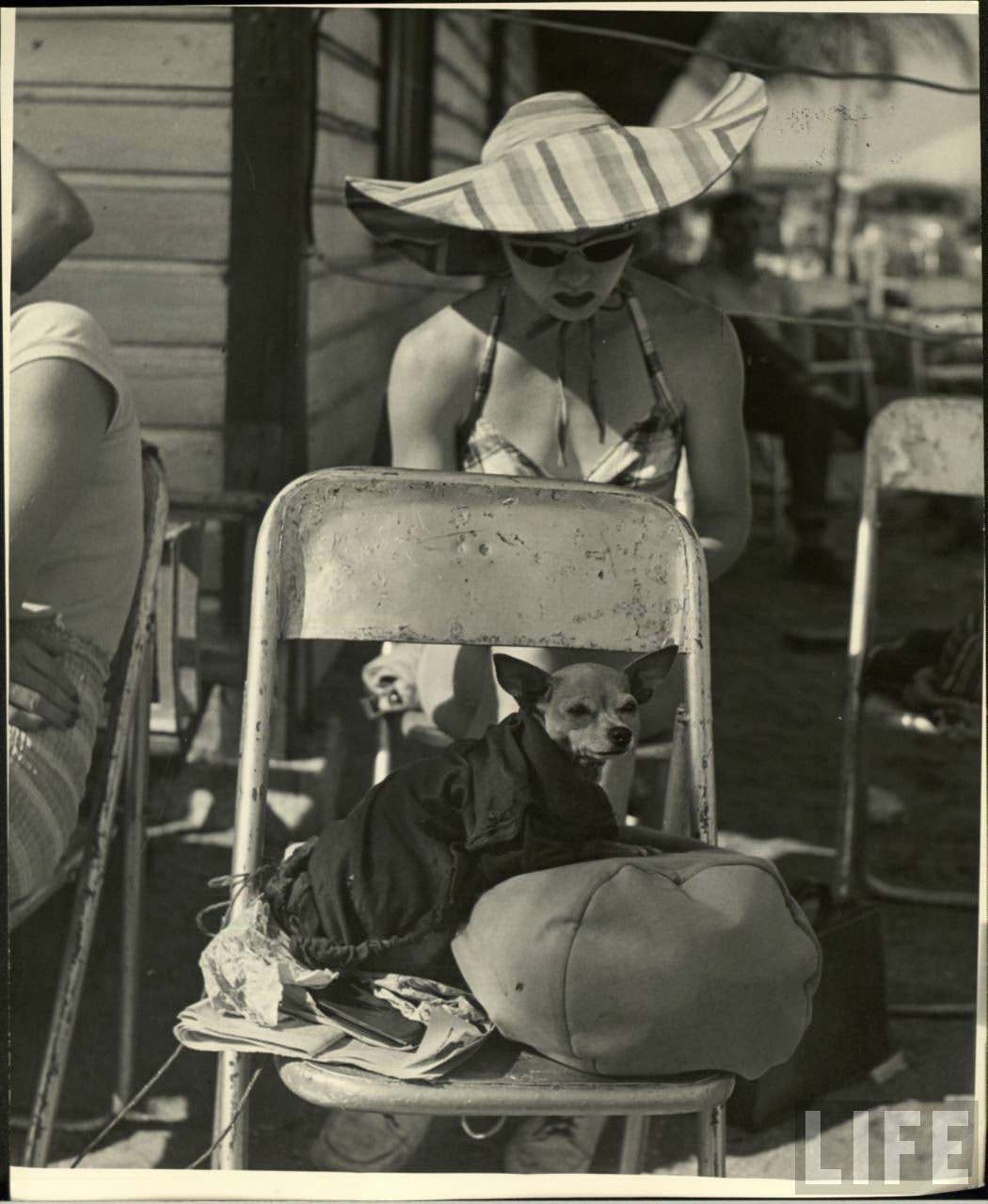
Sunlight and sawdust seem to hang in the air as a young performer pauses offstage, half-hidden behind a battered folding chair. A wide striped sunhat and dark sunglasses give her a movie-star silhouette, yet the setting is pure working circus—wooden siding, scattered gear, and the casual clutter of people waiting between acts. It’s an unguarded moment that fits the title’s promise of “daily life,” where the glamour is real but always edged by routine.
In the foreground, a small dog sprawls on the chair like it owns the place, nestled among fabric and a soft bag that look like they’ve been hauled from trunk to trunk. That humble pile of belongings says as much as any spotlight: performers lived with their costumes, their props, and their companions close at hand, making temporary corners feel like home. The dog’s calm presence adds warmth and humor, a reminder that circus communities were families as much as they were businesses.
Circus Girls of Sarasota points toward the postwar era’s fascination with athletic women and show-world style, and the photo leans into both without forcing a pose. The relaxed posture, practical seating, and improvised “backstage” environment reveal the labor behind acrobat performance—resting, waiting, and keeping one eye on the next cue. For readers searching vintage circus photos, Sarasota circus history, or LIFE magazine-style behind-the-scenes images, this scene delivers an intimate slice of mid-century entertainment culture.