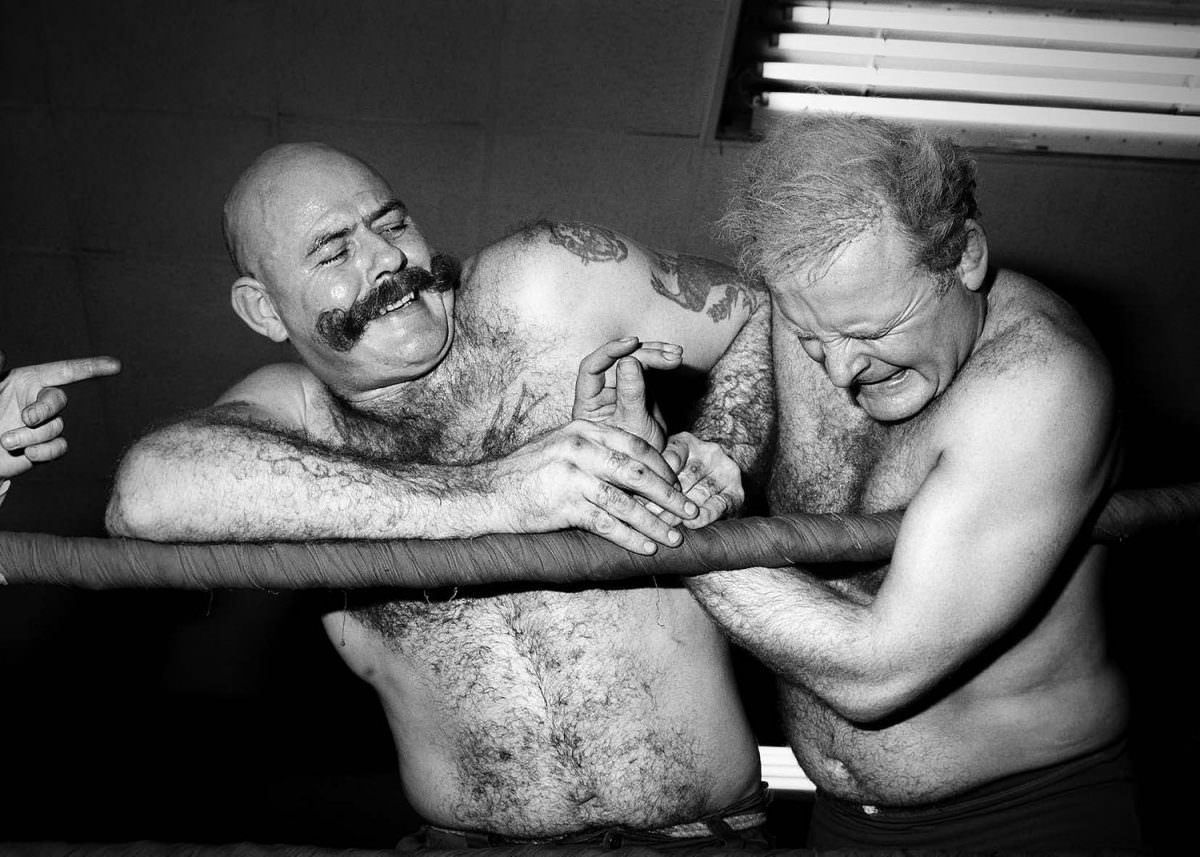
Sweat, strain, and sheer stubbornness fill the frame as two wrestlers lock arms at the ropes, faces twisted between pain and determination. One man leans into a tight hold with a broad moustache and tattooed shoulder on display, while his opponent braces and grimaces, trying to pry free. The close crop and harsh indoor light make the moment feel immediate—less like a staged pose and more like the split second before the balance shifts.
In 1980s England, wrestling still had the feel of a working-class night out: small venues, packed rooms, and bouts built on grit as much as showmanship. The scene here suggests that familiar British blend of sport and spectacle, where technique—wrist control, leverage, pressure against the ropes—could be read clearly even by newcomers. It’s a reminder that “combat sports” didn’t always mean glossy arenas; often it meant community halls and rings where every shove and counterhold looked personal.
What makes this photo so searchable and so telling for fans of British wrestling history is its texture: the ring rope cutting across the foreground, the tension in the hands, the unguarded expressions that TV highlights rarely lingered on. Whether you remember Saturday-night broadcasts or only know the era through stories, the image points to a lost rhythm of entertainment in England—loud, physical, and intensely local. Step into the details and you can almost hear the crowd reacting to each turn of the hold.