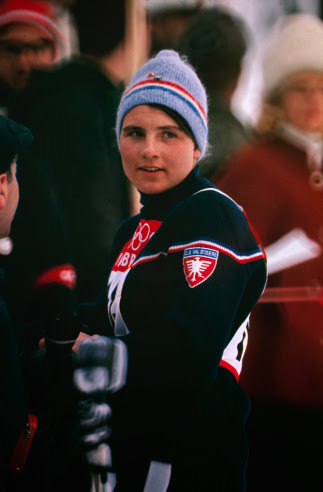
A young winter athlete pauses amid the bustle of the 1964 Innsbruck Olympics, turning toward the camera with a calm, focused expression. Dressed in a tight racing suit and knit cap, the competitor looks ready for the cold and the pressure, holding gear close while spectators blur into the background. The shallow depth of field and muted tones draw attention to the face, making the moment feel intimate despite the surrounding crowd.
The uniform details hint at national pride without fully settling the mystery of identity: a bold patch sits on the chest, and the familiar Olympic rings appear on the front. Between the crisp lines of the suit and the soft winter hats in the stands, the photo balances athletic precision with the warmth of a public gathering. It’s the kind of candid scene that often slips between official podium shots, yet says just as much about the lived experience of the Games.
Innsbruck’s 1964 Winter Olympics marked a turning point in how global audiences encountered winter sport, and this frame preserves the atmosphere of that era—earnest, crowded, and close to the action. For collectors and researchers interested in Olympic history, vintage sports photography, and unidentified athletes, the image offers a compelling starting point for further identification and context. Even without a confirmed name, the athlete’s presence anchors the story of competition as something personal, not just statistical.