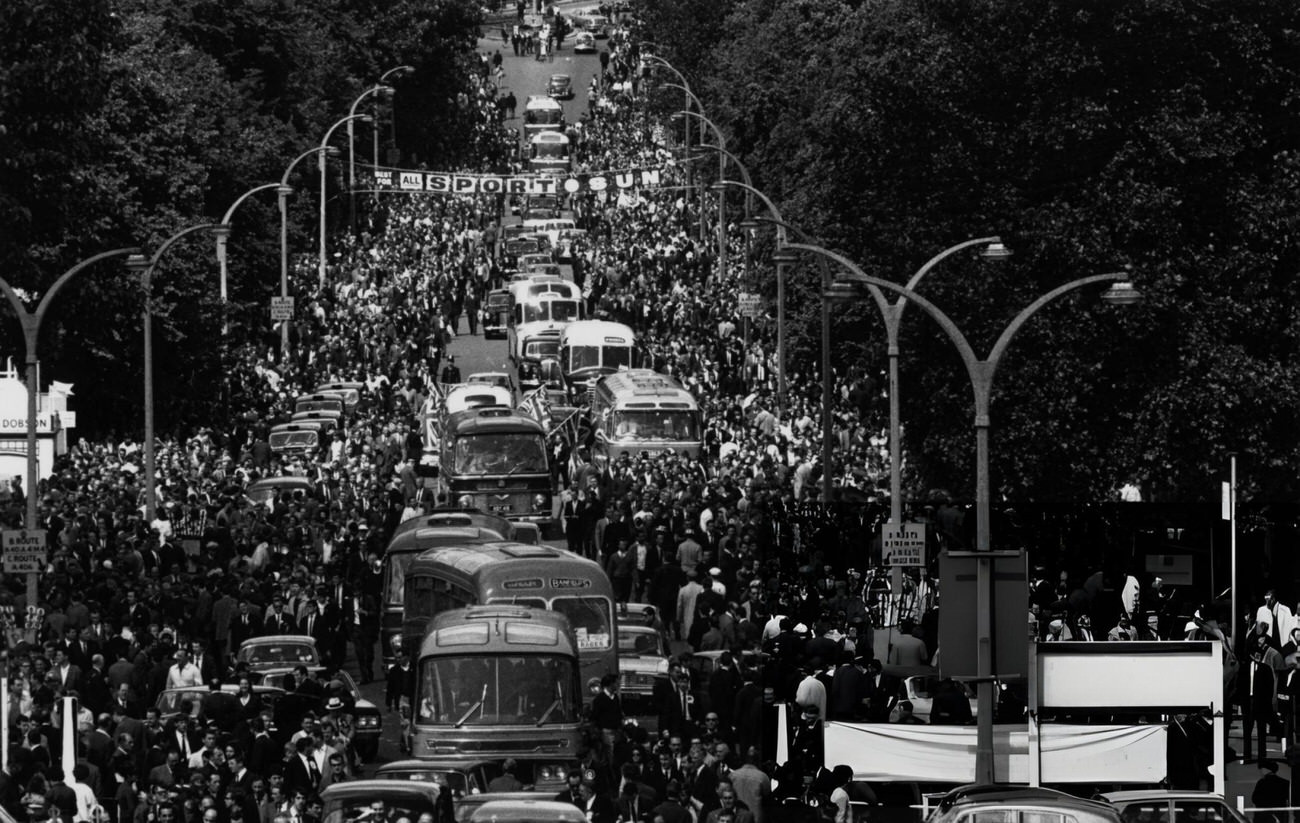
London’s approach roads to Wembley Stadium are packed shoulder to shoulder as supporters stream in for the 1966 World Cup Final. The view down the broad avenue is a tide of people squeezed alongside slow-moving cars and buses, framed by tall, curved streetlights and dense summer trees. Above the crowd, a banner stretches across the road like a finishing tape, hinting at the carnival atmosphere that football could summon in mid-century Britain.
What stands out is the choreography of arrival: public transport inching forward, private vehicles hemmed in, and pedestrians filling every gap with purposeful momentum. Men in suits and coats mingle with fans dressed for a big day out, creating a snapshot of everyday style as much as sporting anticipation. The sheer scale of the gathering turns the journey itself into an event, a communal procession toward one of the most famous matches in football history.
For anyone searching for a vivid historical photo of Wembley in 1966, this scene captures the World Cup as lived experience—streets, crowds, and the urban infrastructure straining to carry a nation’s excitement. It’s a reminder that major finals are made not only by what happens on the pitch, but by the hours of waiting, walking, and jostling that build the drama outside the stadium gates. Seen today, the image reads as both sports heritage and a portrait of London on a landmark day.