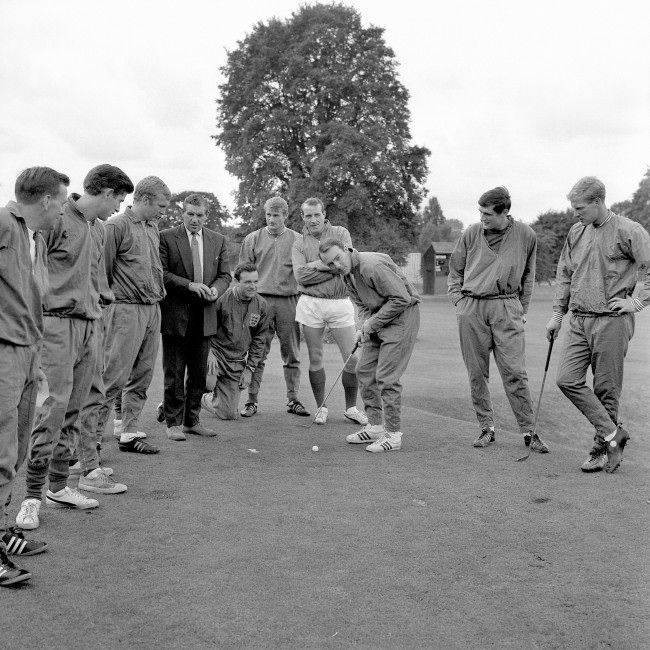
A loose circle of tracksuit-clad England players gathers on a quiet green, eyes fixed on a putt as one teammate bends to read the line. Golf clubs replace football boots for an afternoon, and the mood feels more like a mates’ outing than a high-pressure training camp—yet the concentration is unmistakable. In a single frame, the 1966 World Cup squad’s preparation looks as much about calm nerves and sharp focus as it is about fitness.
Off the pitch, these small rituals mattered: a change of sport, a shared joke, the gentle competition of cricket or golf, and the easy rhythm of waiting your turn. The photograph hints at a squad learning how to live together under intense scrutiny, using laughter and routine to keep tension at bay. Even without a stadium in sight, the body language speaks to unity—players watching, listening, and taking cues from one another.
For readers searching the story behind England’s 1966 World Cup build-up, this moment offers a refreshing angle on how champions are made. The title’s promise of “golf, cricket, and laughter” feels grounded here in the everyday textures of training: teamwork in downtime, confidence built in small victories, and a group mentality settling into place. It’s a reminder that on the eve of glory, preparation can look surprisingly ordinary—and that may be exactly the point.