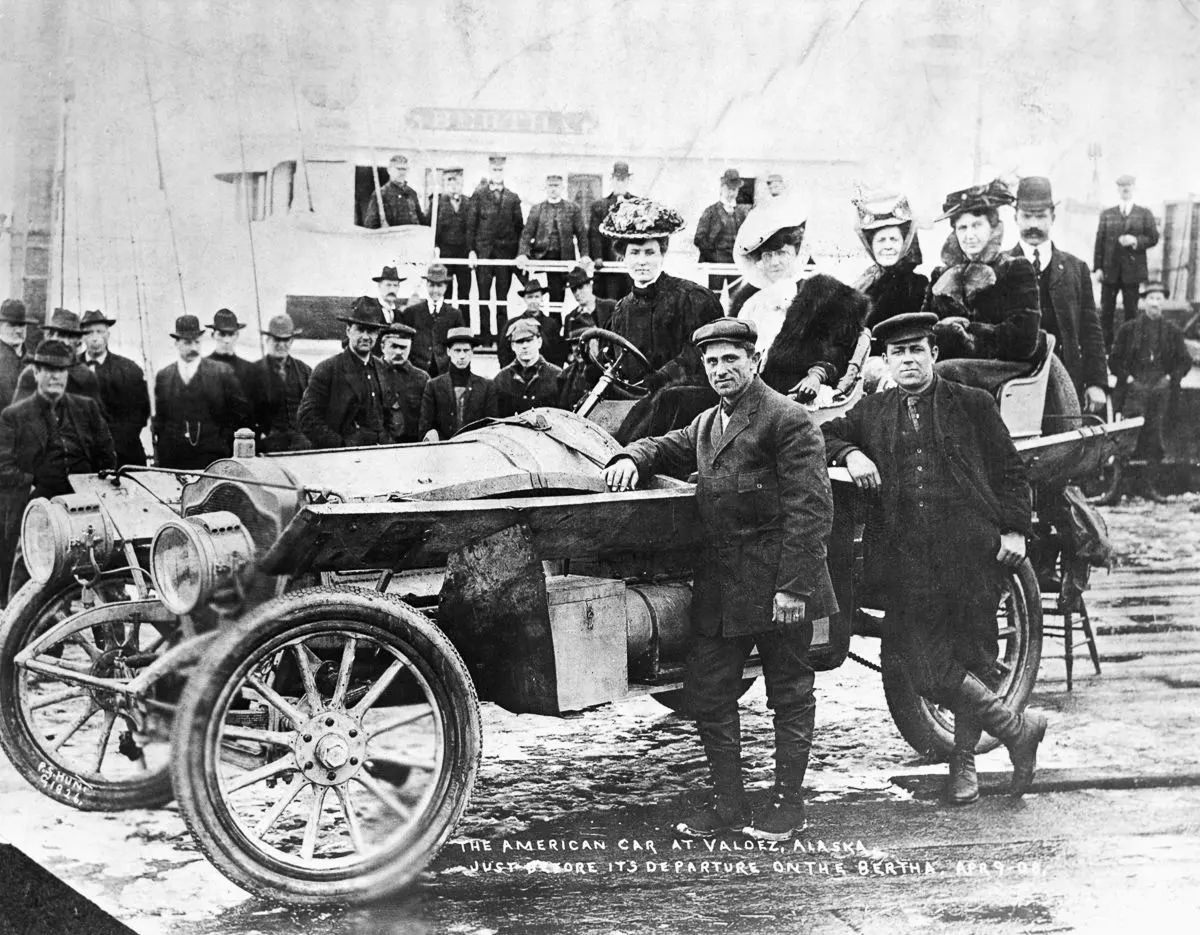
A crowded dockside scene in Valdez, Alaska frames the American Thomas Flyer as it pauses for a ferry, surrounded by bundled spectators and well-dressed passengers perched high in the open car. The machine itself looks more like a rugged carriage with an engine than a modern automobile—big spoked wheels, exposed mechanical parts, and lamps ready for dim roads and long nights. Faces turn toward the camera with the mixture of pride, curiosity, and endurance that defined early motoring culture.
Waiting becomes part of the story here, because distance in the far north was never measured only in miles. Water crossings, weather windows, and the availability of transport could decide the pace of an overland attempt as much as horsepower could. In the context of the Great New York to Paris Auto Race of 1908, this moment hints at the logistical chess game behind the spectacle: drivers, crew, and machine all held in suspense at the edge of the next leg.
Details in clothing and posture underline the era’s contrasts—urban-style coats and hats set against a frontier harbor, elegance sharing space with grease and mud. The Thomas Flyer sits low and long, its bodywork marked by hard use, while the crowd forms a human backdrop that makes the car’s scale and presence unmistakable. For readers searching vintage Alaska photos, Thomas Flyer images, or New York to Paris race history, this stop in Valdez captures the practical reality behind a legendary endurance journey.