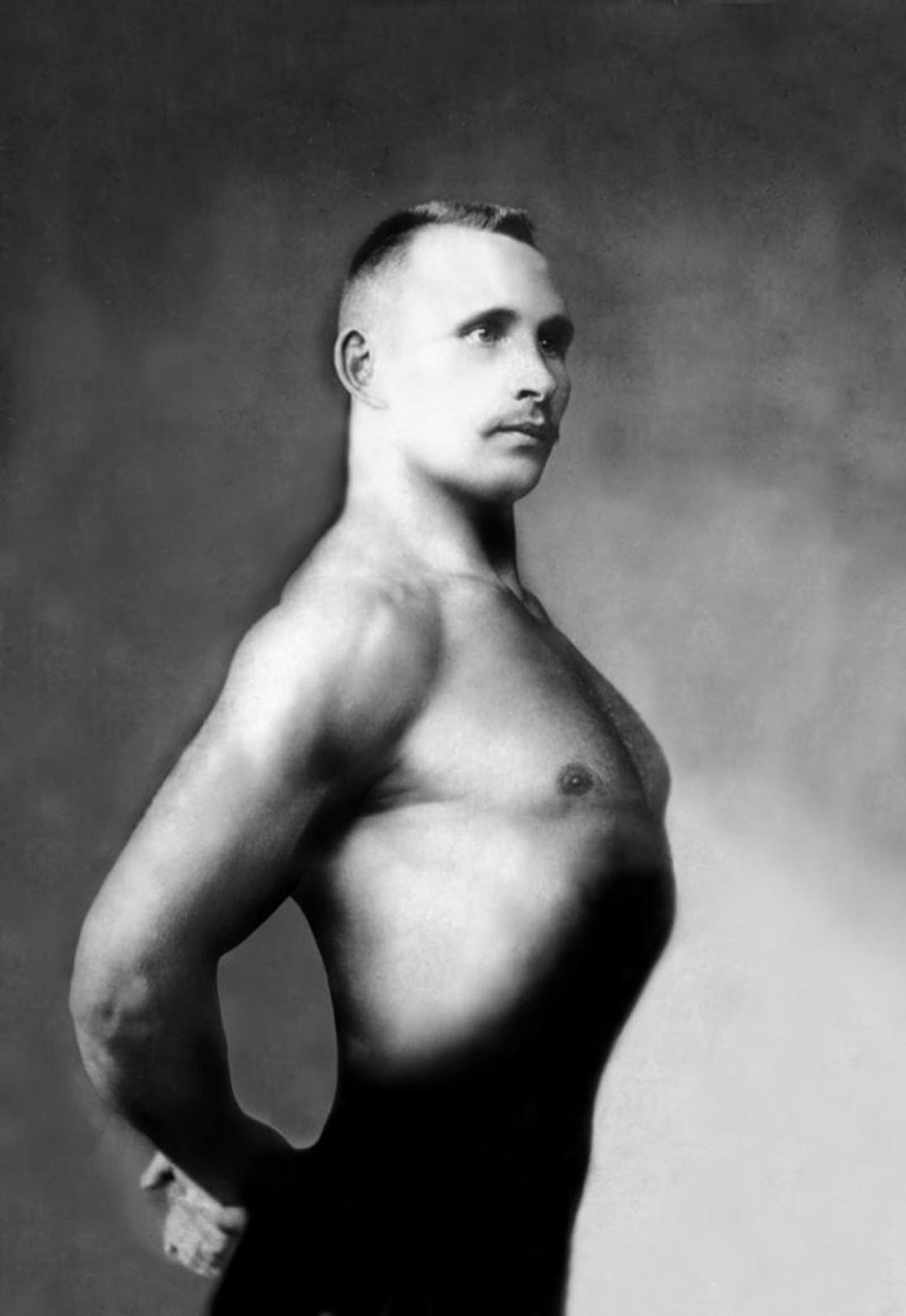
In a quiet studio setting, a Russian strongman stands in profile with his hands clasped behind his back, presenting his physique with the calm assurance of a trained performer. The close-cropped haircut, neat moustache, and steady gaze give the portrait a formal, almost military poise, while soft lighting traces the shoulders, chest, and arms in gentle gradients. With no props or scenery to distract, the body itself becomes the subject—posed, measured, and meant to be studied.
Around 1900, bodybuilding was beginning to take recognizable modern shape, influenced by “physical culture” movements that treated strength as both health practice and public spectacle. Studio photography played a key role in that shift: it could freeze a pose, emphasize symmetry, and circulate ideals of masculine fitness far beyond the gym or stage. The controlled posture here suggests a deliberate presentation, closer to a classical statue than a candid moment of sport.
For readers interested in early bodybuilding history, Russian sports culture, and the roots of modern fitness imagery, this portrait offers a striking window into how the strong body was documented at the turn of the century. It reminds us that long before glossy magazines and social media, athletes used the camera to craft reputation, discipline, and identity. The result is an enduring studio photograph where strength is communicated as much through restraint and composure as through muscle.