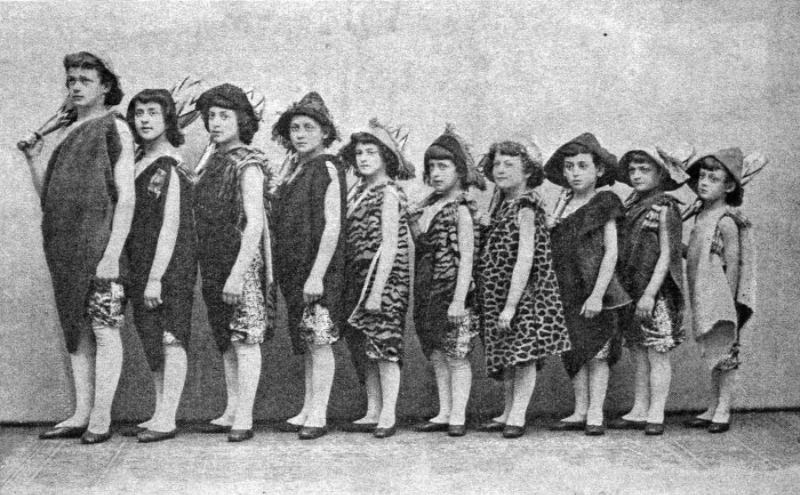
Across a bare stage, a line of performers stands in profile, each holding a club over the shoulder like a baton of the trade. Their costumes mix playful “wild” patterns with matching caps and simple shoes, suggesting a rehearsed troupe identity rather than everyday dress. The plain backdrop keeps attention on posture, symmetry, and the quiet confidence that acrobats project even when they’re standing still.
The title points to the Kremos, a Swiss family whose craft moved across two generations during the late 19th and early 20th centuries, when traveling entertainment and variety shows were booming. Family acts like this relied on discipline and repetition—strength built in childhood, timing learned through constant touring, and roles passed down as naturally as a surname. Seen through that lens, the lineup becomes more than a group portrait; it reads as a record of training, tradition, and the economics of performance.
For readers interested in circus history, European acrobatics, or the roots of modern sports entertainment, this photograph offers rich visual clues: coordinated costuming, stage presentation, and the sense of ensemble that made multi-person acts so memorable. It’s also a reminder that behind every daring balance or tumbling sequence stood families who treated physical skill as both art and livelihood. As a WordPress feature, it invites closer looking—and a deeper appreciation for the Kremos’ place in the long story of acrobatics.