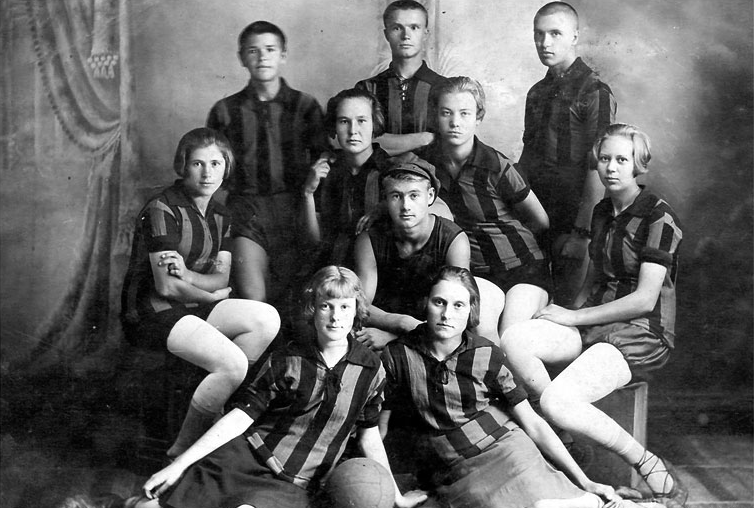
Striped jerseys and steady gazes set the tone in this posed studio team portrait, where young athletes sit and stand in a tight formation as if ready for a match. The uniformity of their kit—dark vertical bands, shorts, and practical footwear—reads like a statement of discipline as much as style, while the simple backdrop keeps every eye on bodies trained for speed and coordination. A ball placed near the front anchors the scene in organized sport rather than casual recreation, hinting at a women’s team proud of its identity.
In the 1930s Soviet world, physical culture was more than exercise; it was a public ideal tied to modernity, collective effort, and resilience. Group photographs like this one were often made to commemorate squads, clubs, and competitions, preserving a moment when women’s sport was becoming increasingly visible and celebrated. The athletes’ composed expressions and confident posture suggest a seriousness that matches the era’s emphasis on strength, readiness, and shared purpose.
For readers searching vintage Soviet sports photos, women’s football history, or 1930s physical culture imagery, this picture offers a striking glimpse into how athletic femininity was presented—strong, capable, and unapologetically team-centered. Beyond the nostalgia of old uniforms and studio lighting, the photograph invites a closer look at training, camaraderie, and the everyday material culture of sport in the early Soviet period. It’s a reminder that behind broad slogans about “strong bodies” were real young people, sitting shoulder to shoulder, willing themselves into the future.