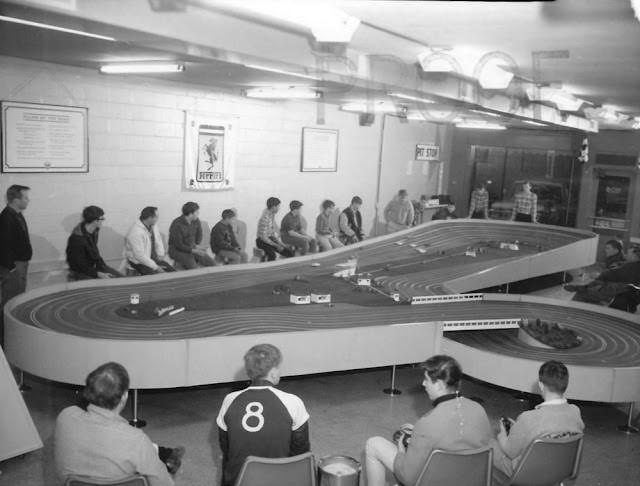
Fluorescent lights glare off a sprawling slot car track as a row of spectators lines the wall, waiting for the next burst of speed. The winding lanes curve and climb across a purpose-built table, with small cars scattered along the course like mechanical promises about to be set loose. In the foreground, a few men sit close to the action, one in a bold jersey marked “8,” giving the room the feel of a miniature grandstand.
Long before home consoles and online racing sims, America found its motorsport thrill in places like this—hobby shops and dedicated raceways where skill meant a steady trigger finger and an eye for the line. Slot car racing in the 1960s blended craft and competition: tuning tiny machines, testing tires, swapping parts, and learning how to carry speed through a corner without deslotting. The scene hints at the social pull of the hobby, too, as much about community and bragging rights as it was about lap times.
For anyone searching the roots of American gaming culture, this kind of photo is a reminder that “screen time” used to be track time. The careful layout, the posted notices on the wall, and the quiet intensity of people gathered around a shared pastime evoke a moment when entertainment was tactile, local, and loud in its own way. It’s a snapshot of the slot car racing craze at its peak—sports obsession scaled down, yet every bit as competitive.