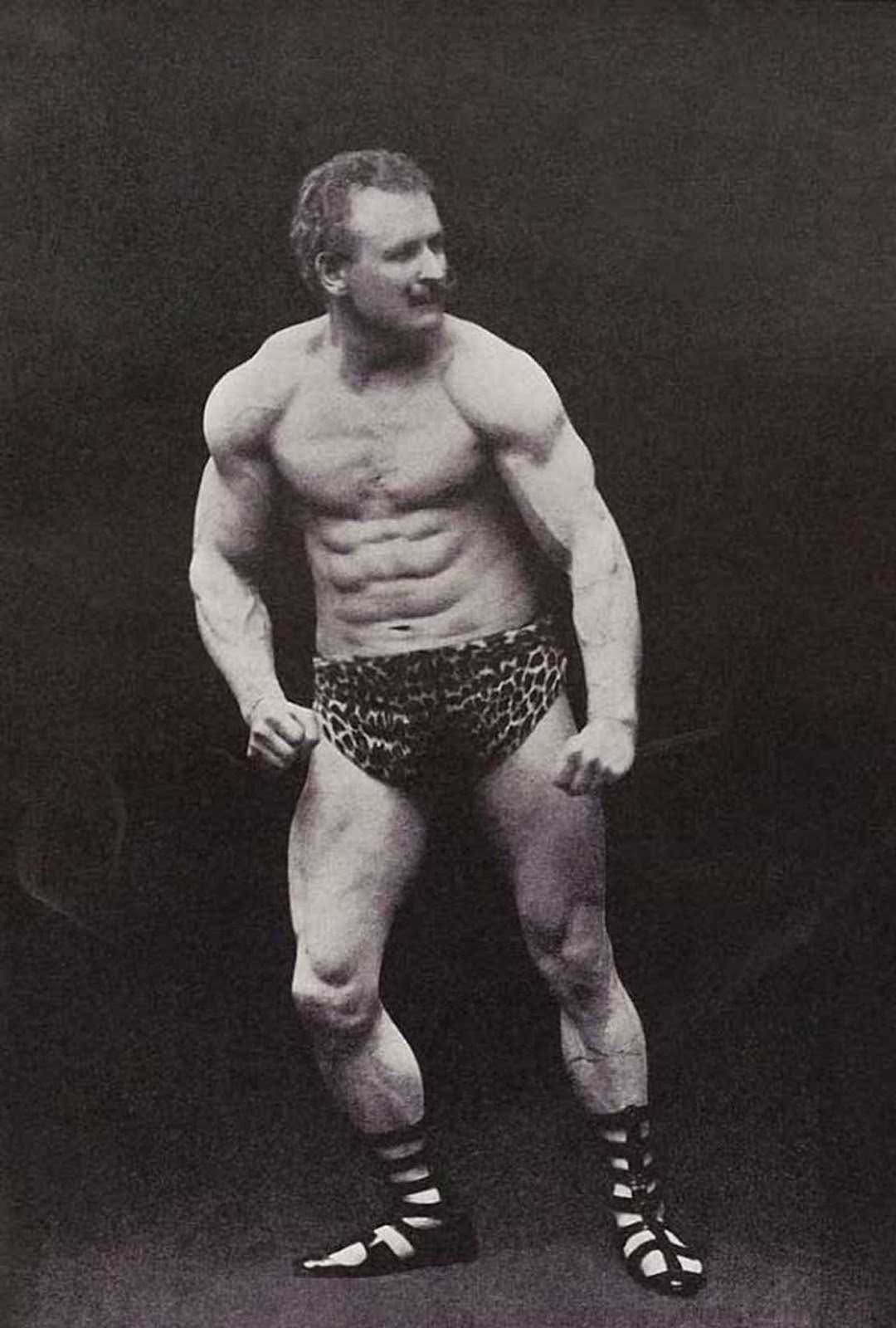
Eugen Sandow stands in a practiced pose, shoulders squared and torso turned as if he’s caught between performance and portrait sitting. The studio backdrop is plain, pushing all attention onto the sculpted lines of his arms, chest, and midsection, while the patterned trunks and strapped footwear echo the era’s stage-strongman aesthetics. Even without motion, the stance feels deliberate—part exhibition, part statement about what “physical culture” meant at the dawn of modern fitness.
Made in 1902, this image belongs to a moment when bodybuilding was taking shape long before gyms, protein marketing, and social media transformed the sport. Sandow’s presentation emphasizes symmetry and definition over sheer size, aligning with late-19th- and early-20th-century ideals that linked strength to discipline, health, and refinement. For readers searching vintage bodybuilding photos, early fitness history, or classic strongman imagery, it’s a striking example of how the athletic body was photographed and admired.
Looking closely, the photograph also hints at the theatrical roots of strength sports: the confident gaze to the side, the clenched hands, and the controlled tension through the legs suggest a performer trained to “hold” an audience. It’s easy to see why Sandow is often discussed as a foundational figure in bodybuilding—this is physique as spectacle, carefully lit and carefully framed. As a historical sports photo, it captures not just a body, but an emerging culture of training, display, and modern masculinity.