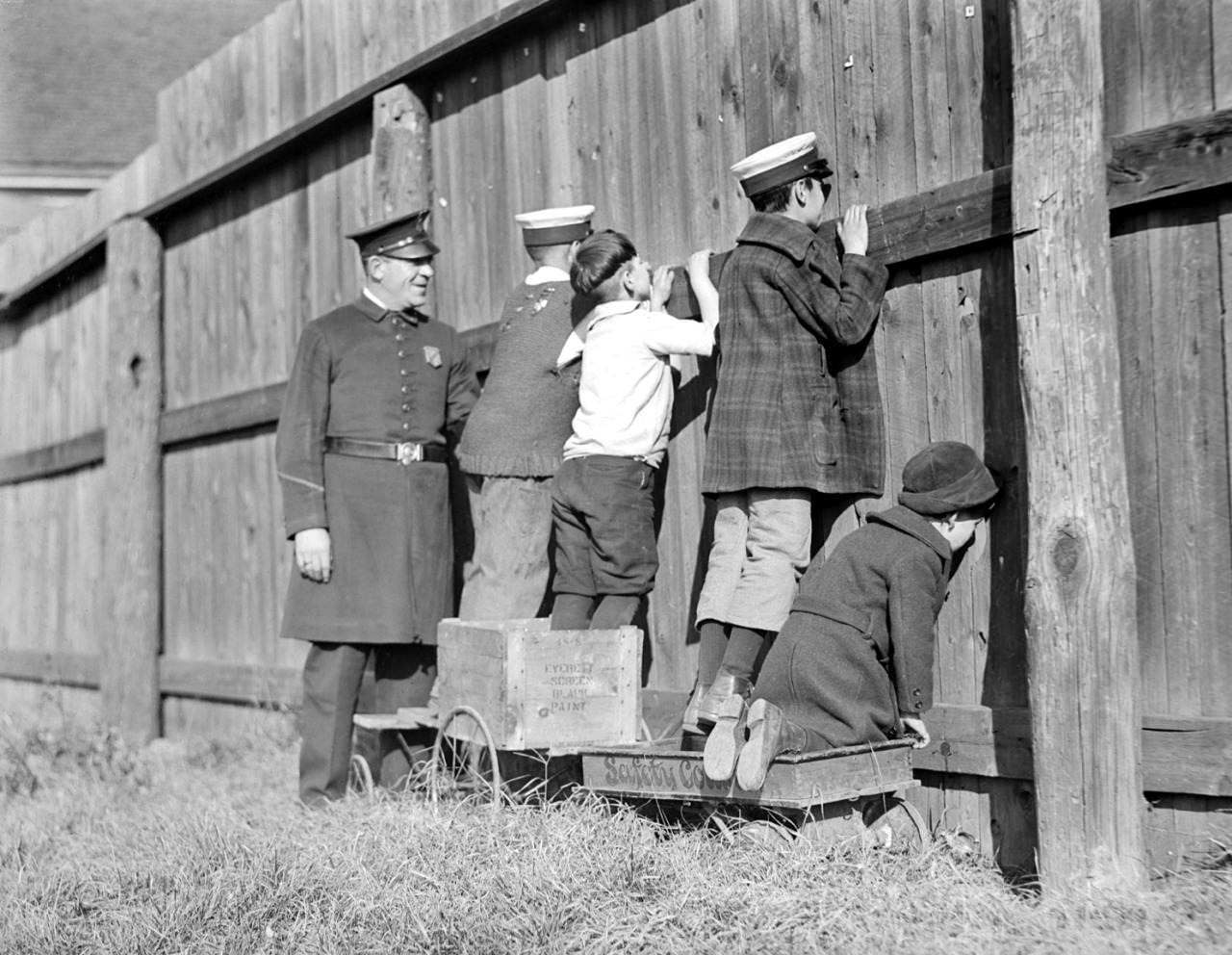
Along a tall wooden outfield fence in Massachusetts, a small cluster of boys turns an ordinary ballpark barrier into a viewing platform, balancing on a little wagon and a crate to gain a precious few inches. Their caps, knickers, and eager posture speak to the era as clearly as the weathered boards, with every face angled toward a game happening just out of sight. It’s a candid reminder that baseball’s magic often spilled beyond the grandstand, reaching anyone willing to improvise a vantage point.
A uniformed police officer stands nearby, less a stern enforcer than an amused chaperone, watching the “peekers” at work. The contrast is delightful: official authority in a dark coat and peaked cap beside youthful ingenuity and restless curiosity. In the 1930s, when spare change mattered and entertainment could be hard-won, sneaking a glimpse through cracks in the fence was its own kind of admission ticket.
Details in the scene—sunlit grass, rough lumber, and the makeshift stepping-stones—make this vintage sports photo feel immediate and lived-in. For readers searching for baseball history, Depression-era Americana, or early 20th-century fan culture, the image captures the timeless urge to be close to the action, even if only through a sliver of daylight between boards. It’s a simple moment that echoes across generations: community, play, and the irresistible pull of the game.