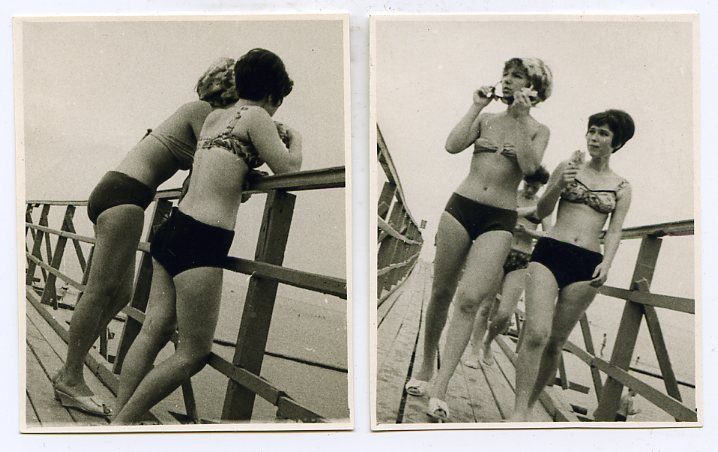
Along a wooden pier or boardwalk, two small vintage prints linger on a casual moment between training and leisure: young women in simple two-piece swimwear lean on the railing, looking out over open water. The candid angles, the grain of the paper, and the easy posture of the figures make the scene feel unposed, as if the photographer caught them mid-conversation while the day’s sport and sun were still on their skin.
On the second print, one athlete lifts her hands toward her face as if adjusting something or wiping away sea spray, while another stands close by, relaxed and attentive. Their bodies read as strong and practiced rather than ornamental—an everyday athleticism that fits the 1930s Soviet ideal of healthy citizens and disciplined youth. Even without banners or stadiums, the setting suggests a culture where swimming, sun, and movement belonged to public life as much as to private recreation.
Strong Bodies, Strong Will invites a closer look at how Soviet sport girls were pictured in the 1930s: not as distant icons, but as friends and teammates sharing a waterfront pause. These photographs offer texture for anyone interested in Soviet sports history, vintage swimwear, women’s physical culture, and the visual language of fitness in the interwar years. More than “sports,” they preserve the quiet confidence of a generation taught to treat strength as both a personal habit and a social duty.