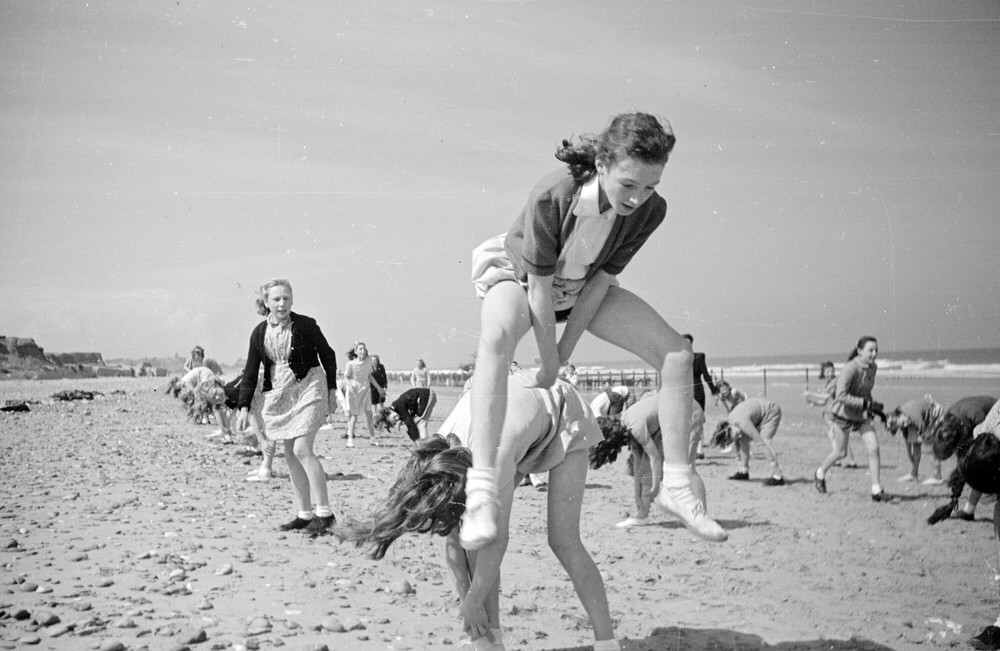
Salt air and school-day energy meet on the sands of Hornsea, where pupils from a Wakefield school’s residential seaside branch spill into a spirited break from work. The central pair are caught mid-leapfrog—one girl braced low, the other launching over with hands planted for balance—while the beach behind them fills with classmates bending, jumping, and laughing in loose lines that stretch toward the water.
Clothing details anchor the scene firmly in the late 1940s: practical cardigans, shorts, sturdy shoes, and socks suited to running on pebbly shore. The open horizon and broad beach give the moment a sense of freedom, yet there’s also an underlying order, as if the game is part of a planned routine—exercise and recreation folded into the rhythms of a residential school day by the sea.
Dated 7th August 1948, the photograph offers a vivid snapshot of British seaside life after the war, when simple games could transform a working break into something memorable. For readers searching for vintage photos of children playing leapfrog, school holidays by the coast, or Hornsea local history, it’s a lively reminder that play has long been as important to learning as the lessons themselves.