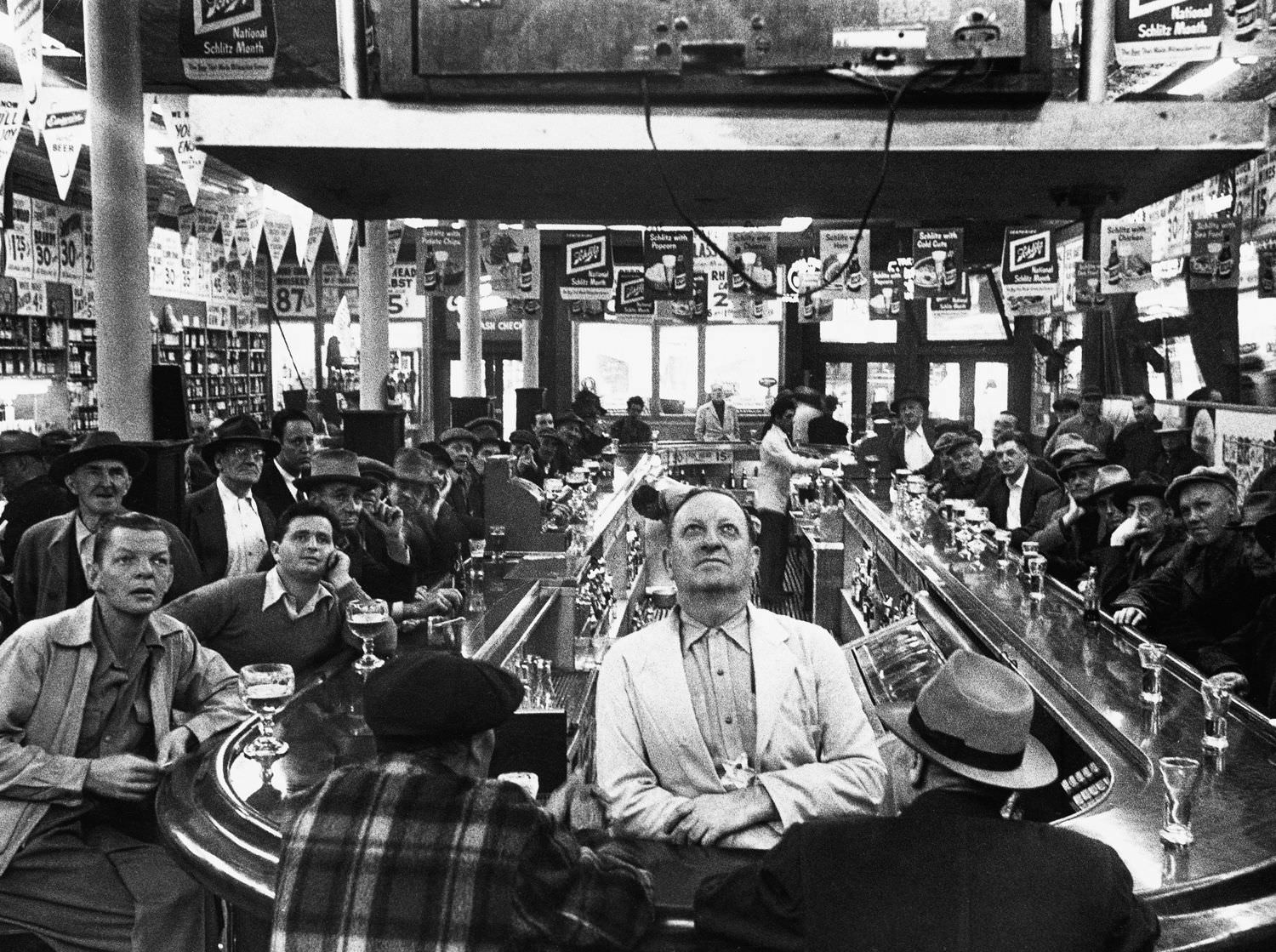
Noise seems to drop away inside this crowded Chicago bar as every face tilts upward toward the unseen television broadcast of the 1952 Subway Series. Men in brimmed hats and work jackets pack the stools and stand shoulder to shoulder along a gleaming counter, their attention fixed in the same direction with the kind of concentration usually reserved for a factory floor or a courtroom. Beer glasses and small shots sit untouched, suggesting that the next pitch matters more than the next sip.
Behind the spectators, advertising placards and hanging pennants frame the room like a makeshift stadium canopy, turning an everyday neighborhood watering hole into a communal grandstand. The bartender and patrons alike appear caught between routine and ritual, as if the bar’s ordinary rhythms have been suspended for the duration of Yankees vs. Dodgers. It’s a vivid reminder of how early TV and big-game baseball reshaped social spaces, drawing strangers into a single, shared storyline.
The title’s note that New York won in seven games gives the scene an extra edge: these fans are watching a series built on tension, momentum swings, and the pull of two iconic clubs meeting on the sport’s biggest stage. Even far from the ballparks, the World Series could command a city’s evening, binding people together through radio-and-television era fandom. For readers searching vintage baseball photos, classic sports history, or the culture of mid-century bars, this image distills the timeless drama of October into one roomful of held breath.