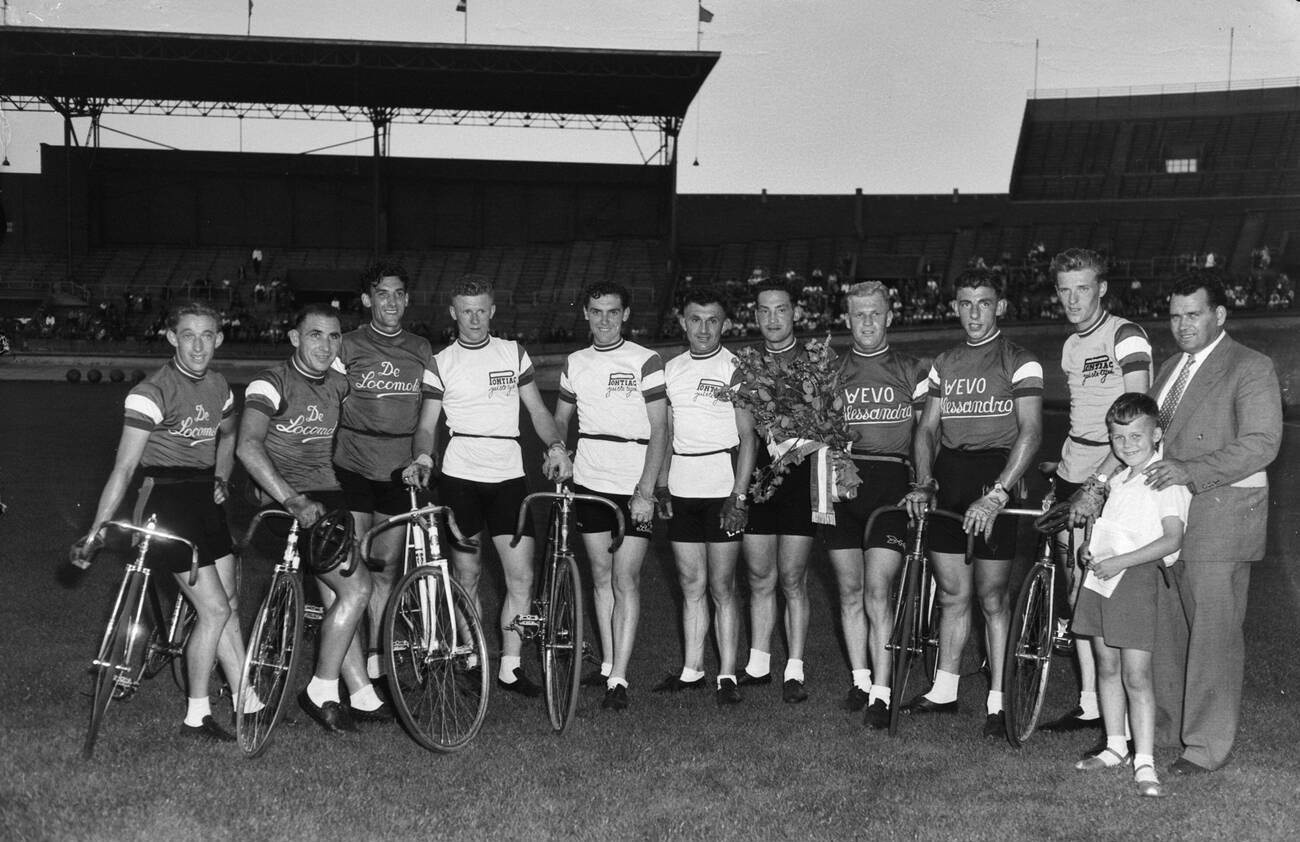
Under the high roofline of the Olympic Stadium, a line of Tour de France riders stands shoulder to shoulder on the infield, their racing bikes angled toward the camera like props in a carefully staged victory scene. Sponsor logos stretch across wool jerseys, and the mix of dark and light kit makes the team formation easy to read even at a glance. In the background, the grandstand fades into shadow while scattered spectators linger, giving the moment the quiet, after-the-finish feel of a long summer day at the track.
1953 sits in a fascinating era of cycling history, when endurance, teamwork, and tactics had to contend with heavier machines and minimal support compared with modern racing. The slim steel frames, narrow tires, and simple handlebars hint at the practical technology of mid-century road racing, built for resilience rather than comfort. Faces are sun-touched and serious, yet relaxed enough for the photograph—an instant where effort gives way to ceremony.
A bouquet held at center draws the eye, suggesting a presentation or welcome that turns a sporting squad into public heroes for a few minutes. Two figures at the edge—one in a suit, another a boy in short sleeves—add a civic, community note, as if the stadium is hosting not just a competition but a celebration of the Tour itself. For anyone searching for Tour de France 1953, Olympic Stadium cycling, or classic road-racing imagery, this photo offers a rich glimpse of how champions were displayed, sponsored, and remembered.