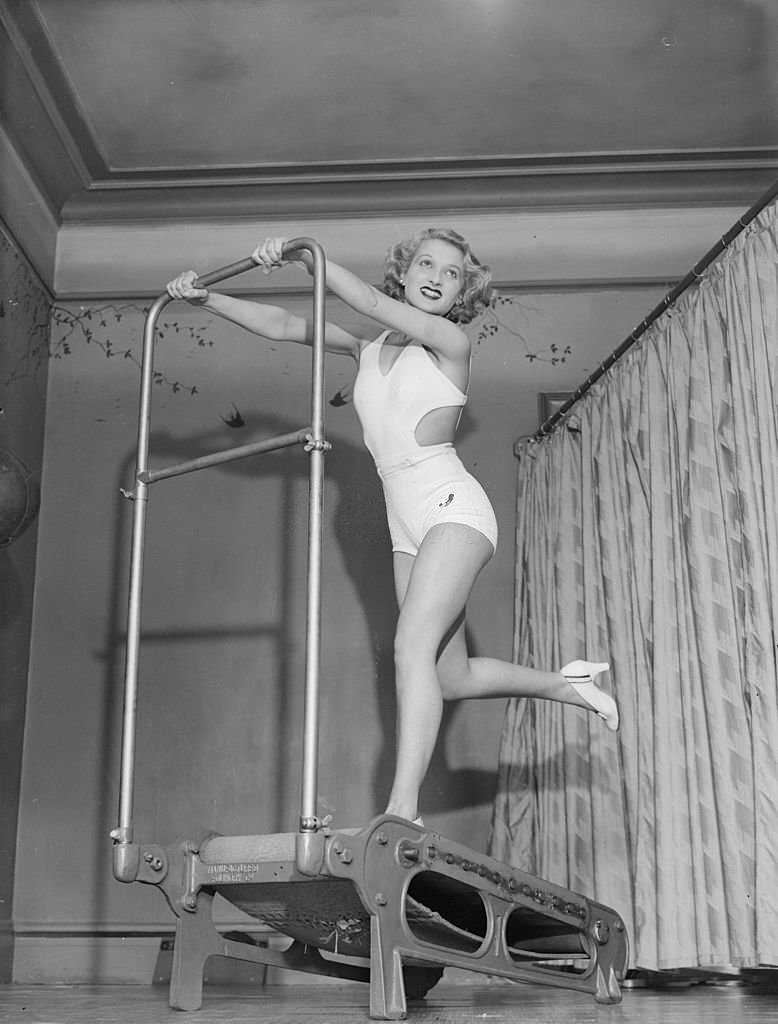
Perched with dancerly poise on a hefty early treadmill, Rosemary Andree turns a piece of exercise equipment into a stage. The metal frame, wide belt, and upright rails suggest a machine built more like industrial hardware than today’s sleek cardio devices, yet her lifted leg and open chest read as choreography rather than routine. In a simple training outfit and soft shoes, she demonstrates how “body culture” blended performance, posture, and physical conditioning into a single visual language.
Long before home gyms and fitness apps, exercise often arrived as a spectacle—part health advice, part modernity on display. The treadmill here isn’t just for running; it becomes a platform for balance work, controlled extensions, and coordinated movement, borrowing from classical dance to sell the promise of grace and strength. That mix of athletics and aesthetics helps explain why unusual workout machines from the past were photographed so often: they signaled progress, discipline, and a new kind of fashionable vitality.
For readers interested in vintage fitness, historical workout methods, and the evolution of sports training, this image offers a striking bridge between dance studio and gym floor. Details in the room—plain walls, a heavy curtain, and the staged lighting—underscore that the moment was meant to be seen, not merely practiced. Rosemary Andree’s demonstration reminds us that the history of exercise is also the history of how bodies were taught to move, be admired, and be modern.