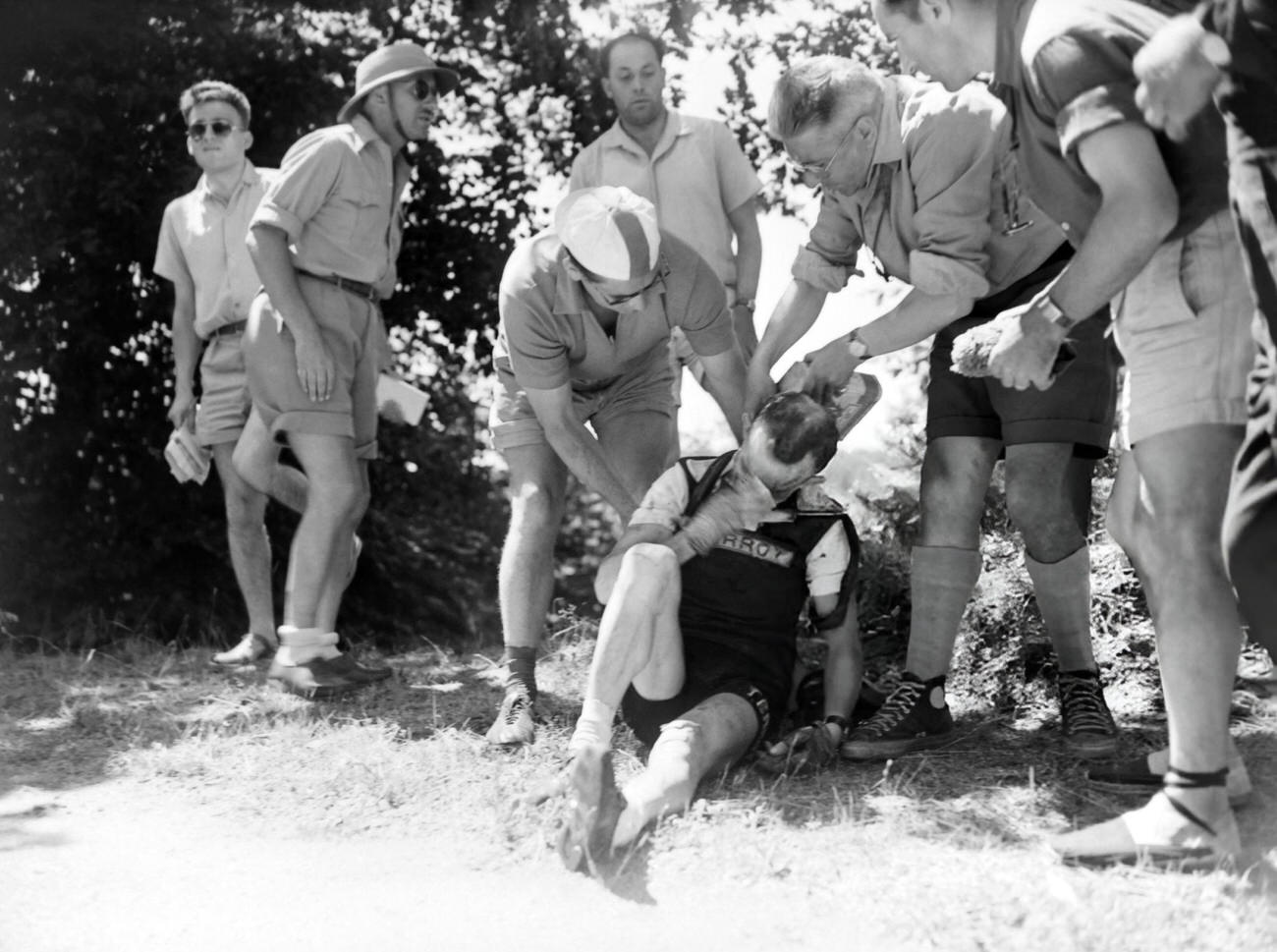
Dust and summer light hang over the roadside as Jean Robic sits slumped on the grass, the shock of a fall still written in his posture. Several men lean in to steady him, one reaching toward his head while another braces an arm, turning the scene into an impromptu first-aid station under the trees. The rider’s jersey and racing shorts—stark against the shaded ground—underscore how exposed a cyclist can be when the Tour de France turns unforgiving.
What stands out is the instant community that forms around a crash: spectators and helpers crowd close, faces tense, hands busy, attention fixed on the injured competitor rather than the race continuing beyond the frame. The mix of casual clothing, sunglasses, and practical footwear evokes the feel of mid-century roadside viewing, where fans stood only a few steps from the action. It’s a candid glimpse of cycling’s risk and resilience, captured not on a podium but in the raw aftermath of impact.
In 1953, the Tour de France already carried the aura of endurance and national spectacle, yet moments like this reveal its human cost in plain terms. Robic’s struggle here speaks to the era’s grittier racing conditions—narrow margins, hard roads, and limited protection—when recovery depended as much on will as on assistance. For readers searching Tour de France history, Jean Robic, or classic cycling photography, this photo distills the drama of the race into a single, unforgettable pause.