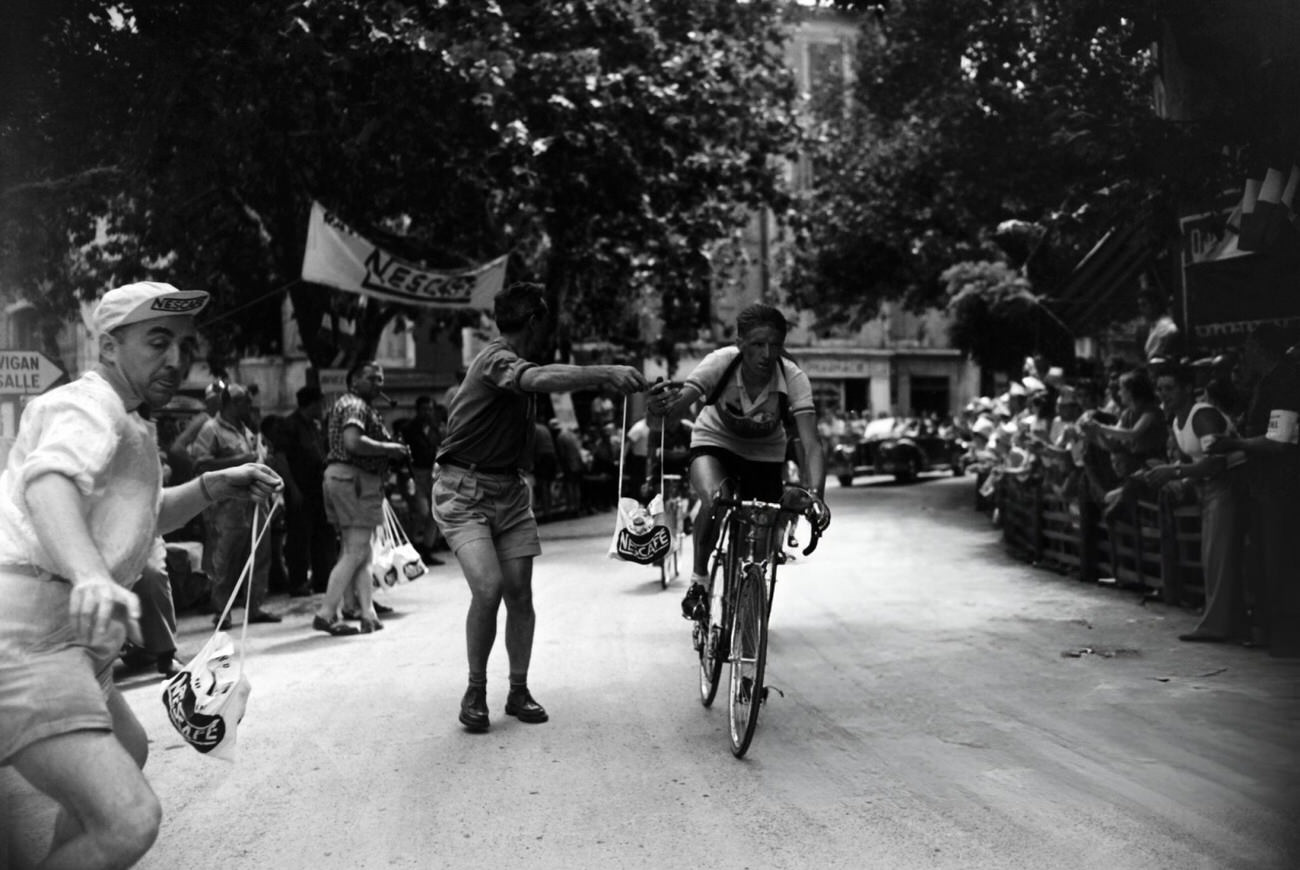
Mid-stage urgency hangs in the air as Jan Nolten rides through a narrowed corridor of spectators during the 1953 Tour de France, eyes fixed ahead while hands reach out from the roadside. A helper steps into the road at just the right moment, extending a musette bag in a practiced handoff that has to be clean, fast, and safe. The scene is framed by a leafy street and packed crowds behind barriers, giving a vivid sense of how close the public could get to the race in cycling’s postwar era.
Provisioning was never a quiet detail in the Tour; it was a moving ritual where nutrition, teamwork, and nerve met at speed. In the foreground another attendant readies more bags, strings looped for quick grabs, while advertising banners and caps hint at the commercial fabric already woven into the sport. The rider’s posture—upright but taut—suggests that even a brief feed zone demanded concentration, because one wobble could mean losing the wheel, the rhythm, or worse.
For readers drawn to Tour de France history, this photograph offers more than a famous name: it preserves the choreography of support that kept riders going long before modern team cars and radio instructions made everything smoother. The contrast between the calm, sun-dappled street and the split-second exchange underscores what made mid-century road racing so compelling—endurance built on countless small interventions. As a WordPress post image, it’s a strong visual anchor for stories about 1950s cycling, race logistics, and the human hands behind every kilometer.