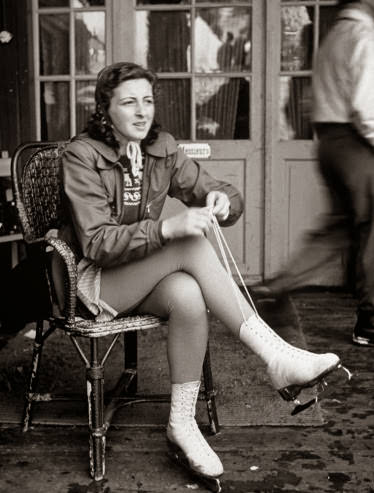
Jeanette Altwegg appears here in a rare off-ice moment, seated in a wicker chair with her figure skates still laced, as if caught between training and competition. The relaxed posture and half-smile give the scene an intimate, behind-the-scenes feel, while the doorway and windowed backdrop suggest a rink-side or lodge setting where athletes would pause, chat, and prepare. Even without the blur of movement on the ice, the image conveys the poised self-control that defined elite figure skating in the postwar era.
Linked to her bronze-medal success at St. Moritz in 1948, the photograph offers a glimpse of British winter sport at a time when the Olympic Games were returning to the world stage. The practical jacket over skating attire, the sturdy boots, and the quiet concentration in her hands all speak to a discipline built on repetition and resilience rather than spectacle alone. A passerby moving through the frame adds a candid, documentary quality, underscoring that great sporting achievements were made amid ordinary, bustling surroundings.
For readers searching for Olympic history, British athletes, or classic figure skating photography, this portrait of Jeanette Altwegg stands as a compelling visual record of mid-20th-century competition culture. It balances achievement with humanity, showing the champion not in a triumphant pose but in the small, telling interlude when nerves are managed and laces are tightened. In that everyday pause lies much of the story of sport: preparation, composure, and the quiet confidence that precedes performance.