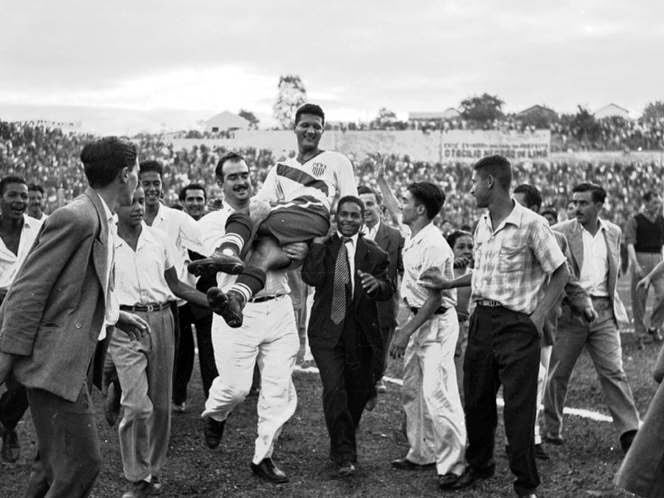
Jubilation spills across the pitch as teammates and supporters lift a U.S. player shoulder-high, his striped socks and crumpled kit still marked by the effort of a hard-fought match. Around him, men in shirtsleeves and jackets crowd in with grins and outstretched hands, turning the field into a moving corridor of celebration. The packed stands and distant hillside frame the scene, hinting at the scale of the crowd that witnessed a result few expected.
For England, the matchup had looked like routine business: a star-studded side, early momentum in the group, and the weight of footballing tradition behind them. Yet World Cup history has a habit of overturning paper predictions, and the United States—built in part from semi-professional players—found a way to resist, strike, and then endure. The title’s mention of Joe Gaetjens, carried off after scoring the decisive header, anchors this photograph in one of the tournament’s most talked-about upsets.
What makes the “Miracle on Grass” endure isn’t only the scoreline, but the human aftermath captured here—the stunned joy of a squad realizing it has changed its own story in a single afternoon. Faces in the crowd lean in as if to confirm the reality of what just happened, while the lifted player rides above the throng like a symbol of improbable triumph. For readers drawn to World Cup lore, Brazil’s footballing past, or the origins of American soccer, this historic photo offers a vivid doorway into the sport’s greatest surprises.