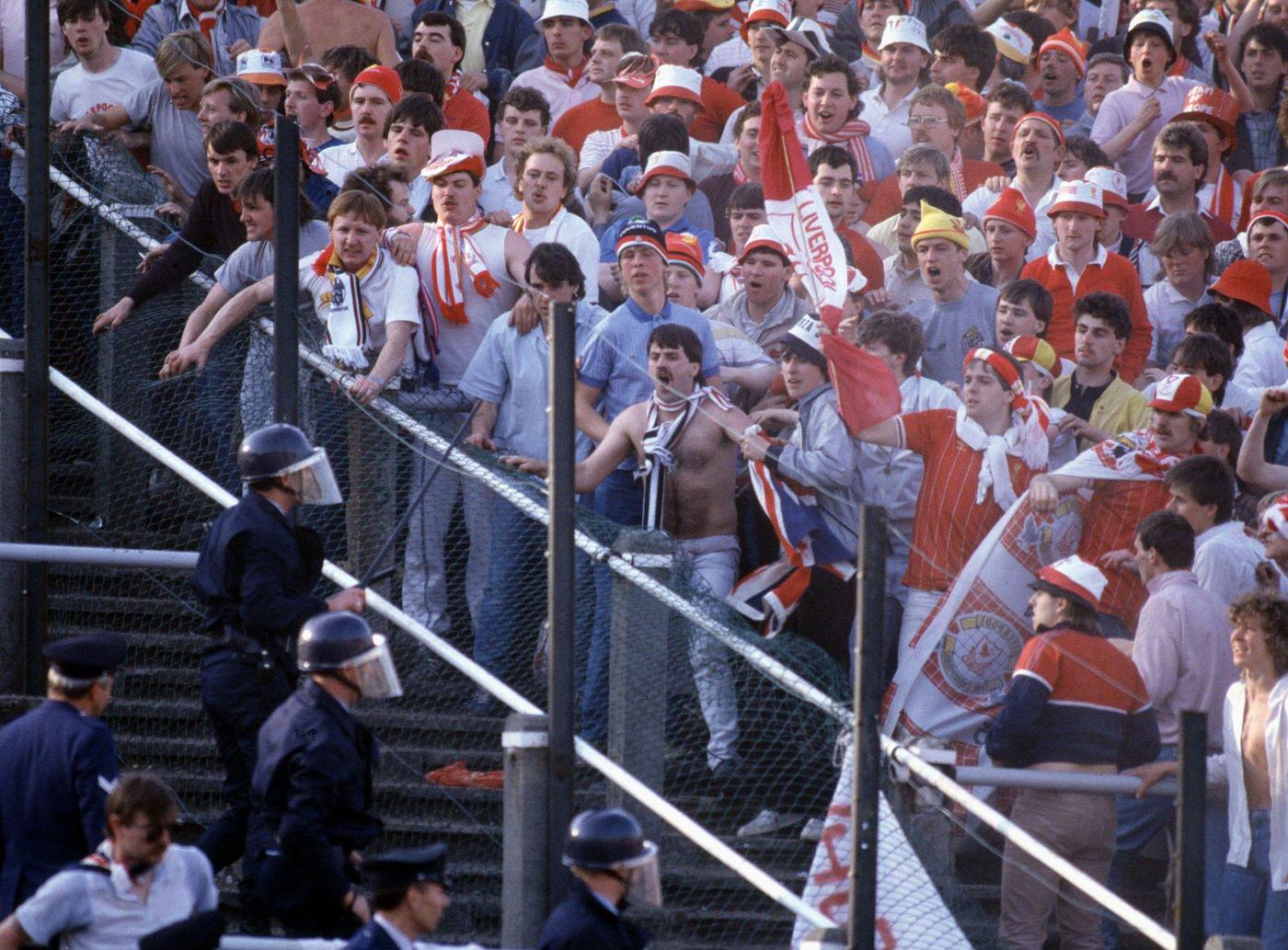
A surge of red-and-white scarves and caps crowds the terrace as Liverpool supporters press against chain-link fencing, faces taut with shouting and agitation. Flags ripple above packed shoulders, and the barrier line feels painfully thin, turning the pre-match crush into a scene of confrontation. Police in helmets and visors hold their positions below, a stark visual reminder that the atmosphere has already slipped from celebration into disorder.
Taken on the day of Juventus vs. Liverpool in 1985, the photograph freezes the uneasy minutes before football’s most infamous European final was even underway. The tension in the stands—bodies leaning forward, arms raised, mouths open mid-chant—speaks to a wider era when crowd control, stadium infrastructure, and supporter culture collided with tragic consequences. Even without showing the later catastrophe, the image reads as an ominous prelude to the Heysel Stadium tragedy that left 39 dead and reshaped the sport’s relationship with safety.
For readers searching the history of football hooliganism, crowd violence, and matchday policing, this moment captures how quickly a big fixture could turn volatile. The fencing, the crush, and the confrontational energy underline why reforms to stadium design and security became unavoidable in the years that followed. It remains a sobering document of Liverpool vs. Juventus, 1985—an event remembered not for the play on the pitch, but for the human cost that changed football forever.