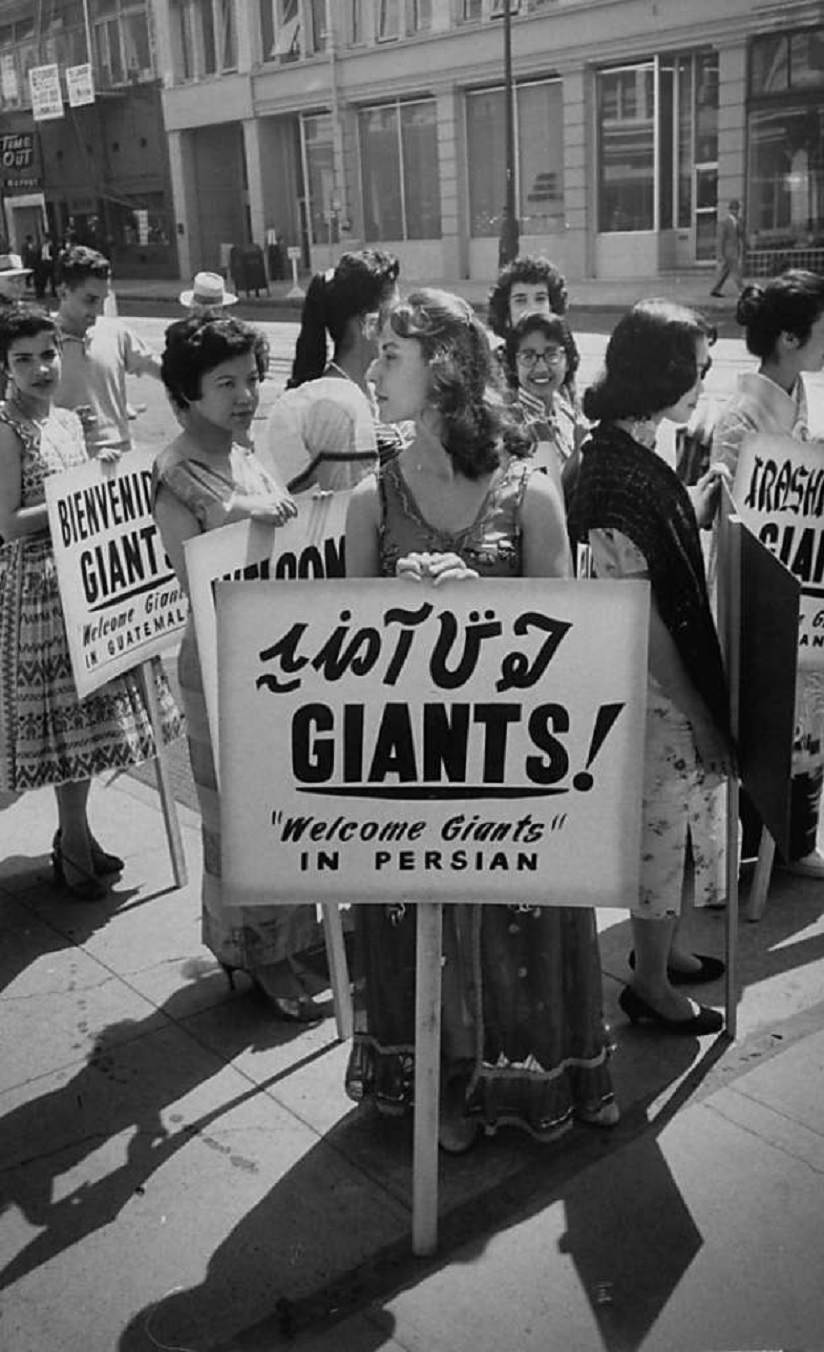
On a bright sidewalk outside Seals Stadium, a cluster of fans gathers with handmade placards that say “GIANTS!” in bold letters, turning the pregame street scene into a public celebration. One sign helpfully explains its message—“Welcome Giants” written in Persian—while another reads “Bienvenidos Giants,” nodding to Spanish speakers in the crowd. The women’s curled hairstyles, summer dresses, and calm-but-excited expressions evoke the everyday glamour of 1950s San Francisco, when baseball was as much about being seen as it was about the score.
What stands out most is how the language of fandom becomes the language of a city: multilingual, immigrant, and proudly communal. These supporters aren’t tucked away in the stands yet; they’re claiming space in the open air, using cardboard and paint to broadcast belonging and welcome. In a single frame, the photo ties the arrival of big-league baseball to the lived diversity of the Bay Area—neighbors shoulder to shoulder, united by a team name and the promise of a game.
For readers searching for vintage baseball photos, San Francisco sports history, or the story of the Giants’ early years in the city, this image offers more than nostalgia. It captures the ritual outside the ballpark—the gathering, the anticipation, the street-level theater that has always surrounded America’s pastime. Seals Stadium becomes the backdrop for a larger portrait of midcentury urban life, where baseball fandom doubles as a snapshot of who San Francisco was, and who it was becoming.