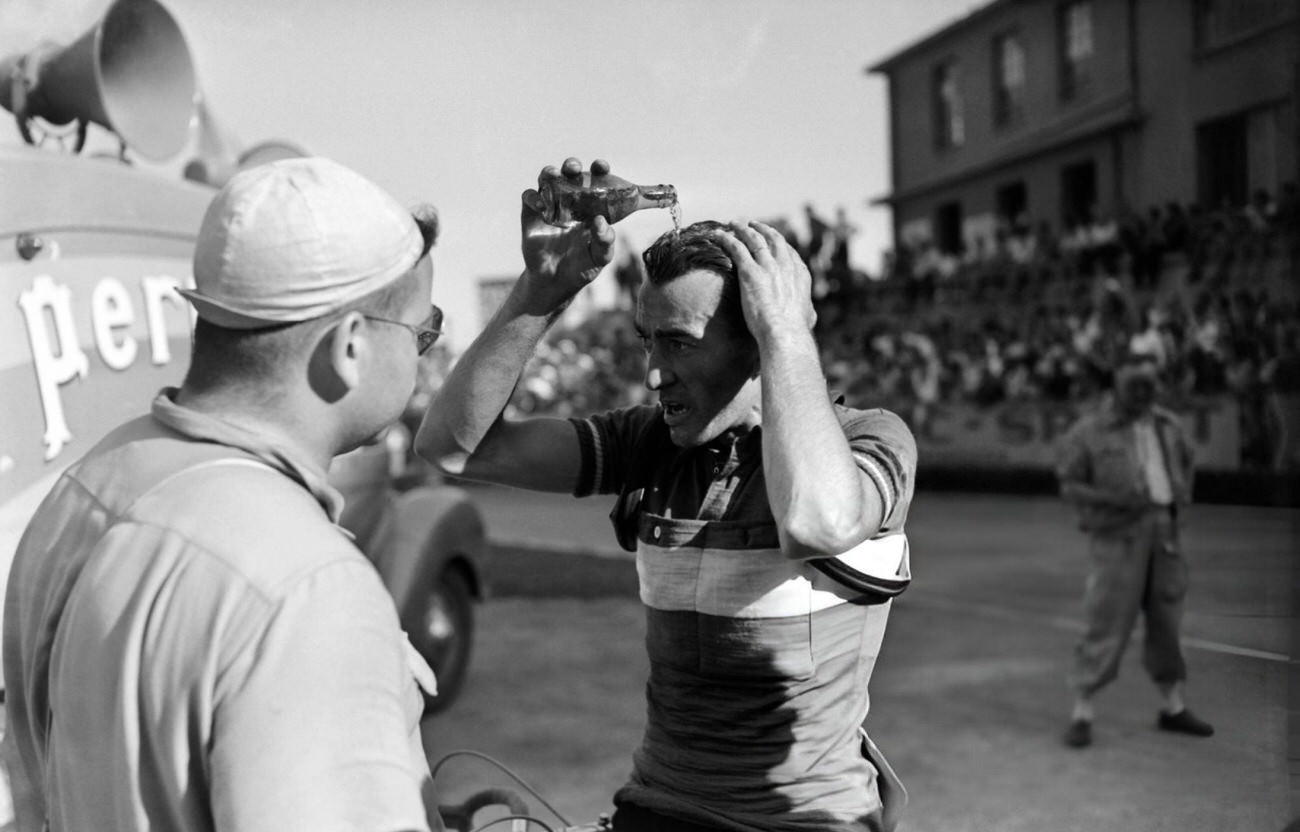
Mid-race fatigue is written all over Louison Bobet’s face as he pauses to refresh during the 1953 Tour de France, tipping a bottle above his head while keeping one hand braced in his hair. The scene feels immediate and unguarded: a champion caught between effort and recovery, jersey darkened with sweat, body language focused on getting back to the road. Behind him, a support vehicle with a roof-mounted loudspeaker hints at the traveling spectacle that followed the peloton from town to town.
What stands out is how practical—and how human—the moment is, far from the polished podium images that often define cycling history. In an era when hydration and cooling meant quick improvisation at roadside stops, a simple splash of water could be as strategic as a gear choice. The close exchange with a nearby official or helper underscores the Tour’s old rhythm: riders, staff, and spectators all woven into the same moving theater.
For readers drawn to classic sports photography, this image offers a vivid window into the physical demands and atmosphere of the Tour de France in the early 1950s. The crowd massed along the street, the stark sunlight, and the utilitarian support setup evoke a race run on grit and routine, not just statistics. As a WordPress post feature, it’s an evocative snapshot of endurance cycling—capturing Bobet’s determination in the small, essential act of cooling down before the next push.