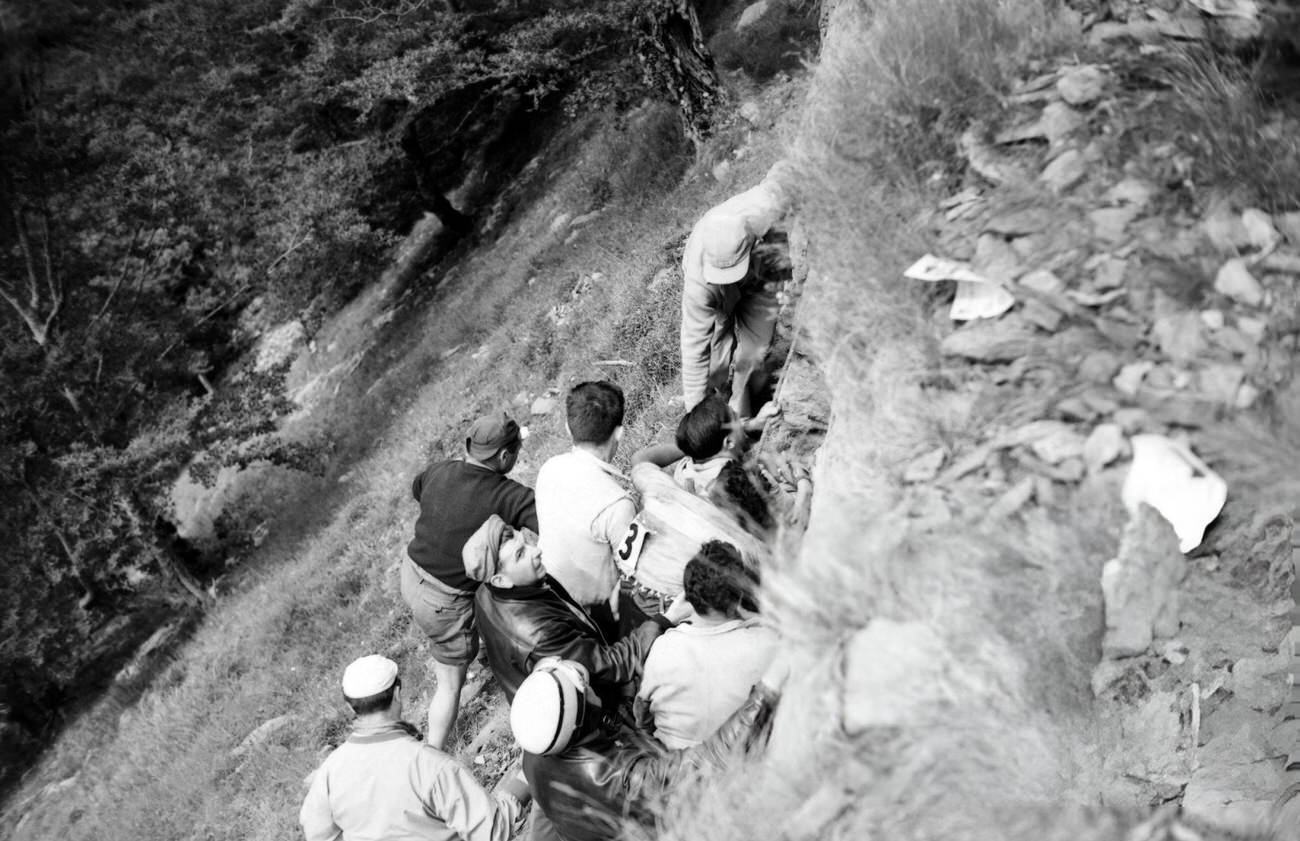
High above a steep roadside drop, a small cluster of men leans into the rock face, arms outstretched and bodies braced as they work to haul a fallen rider back to safety. The cyclist—identified in the title as Guy Buchaille—appears wedged near the cliff, while helpers in caps and jackets form a human chain along the narrow ledge. Shot from an elevated angle, the scene emphasizes both the peril of the terrain and the split-second teamwork that can decide how a crash ends.
Tour de France racing in the early 1950s carried a raw, risky edge, especially on mountain roads where a misjudged corner could send a competitor tumbling into brush and stone. Here, the urgency is palpable: one man steadies himself against the rock, another grips a shoulder, and others crowd in to share the lift. It’s a reminder that the spectacle of endurance cycling has always been matched by the dangers that come with speed, fatigue, and unforgiving landscapes.
For readers searching for Tour de France 1953 history, this photograph offers more than a sporting headline—it captures the human side of the race, where spectators and officials alike become rescuers. Details like the rocky slope, scattered leaves, and tight spacing on the ledge evoke the improvised nature of roadside assistance in that era. As a visual document of a crash and rescue, it preserves the tension, solidarity, and resilience that have long defined cycling’s greatest stage.