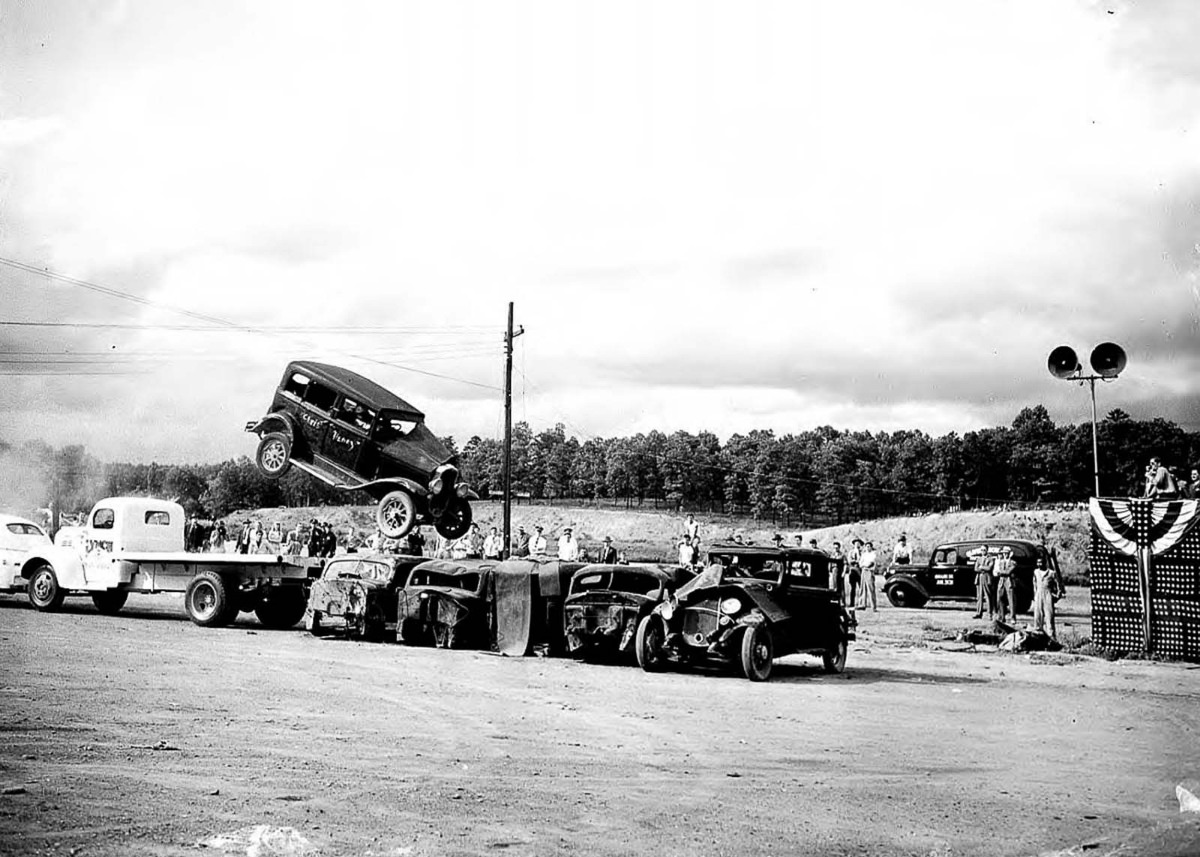
Midair over a line of wrecked sedans, a stunt car hangs for a heartbeat as if it has ignored gravity, launched from a ramped truck and aimed straight at the crowd’s imagination. Spectators form a loose ring around the dusty performance ground, while a small platform dressed with bunting and loudspeakers suggests an emcee calling the action in a fairground voice. The scene is both spectacle and controlled chaos—automobiles turned into props, crumple zones, and punchlines.
Jimmie Lynch’s “Death Dodgers” belonged to a rough-and-ready branch of 1940s sports entertainment where driving skill was measured not by lap times but by nerve, timing, and the willingness to sacrifice sheet metal. These traveling thrill shows blended stunt work with motorsport bravado, selling danger in a package families could watch from a safe distance. The carefully arranged pile of damaged cars hints at choreography: obstacles set in place, trajectories planned, and a dramatic leap staged to look one mistake away from disaster.
For anyone researching vintage auto stunts, daredevil driving, or the history of American motorsport entertainment, this photograph offers rich details—period vehicles, improvised infrastructure, and the crowd’s close proximity to the action. It also captures a cultural moment when postwar audiences craved excitement and promoters delivered it with roaring engines and staged collisions. As a WordPress feature image, it’s a strong window into the era of crash shows, car-jump exhibitions, and the legend of the Death Dodgers.