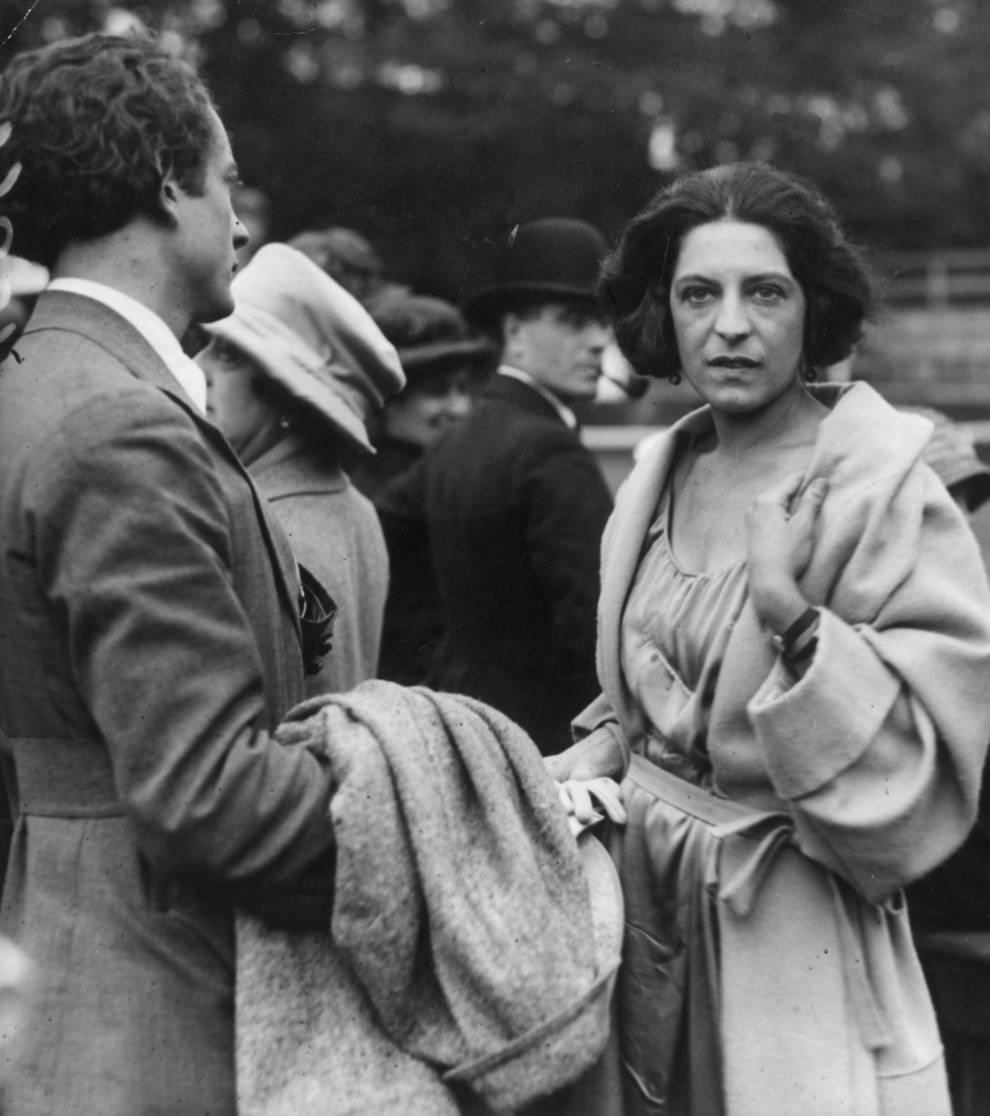
Suzanne Lenglen stands in the Wimbledon crowd in 1920 with the poise of someone already accustomed to being watched, her gaze meeting the camera as easily as she would an opponent across the net. Wrapped in a light coat over a belted dress, she appears composed yet intense, a champion caught between public spectacle and private focus. Around her, hats, suits, and layered outerwear set the scene of early twentieth-century tennis culture, when the tournament was as much a social event as a sporting contest.
Known as a six-time champion in women’s singles and doubles, Lenglen helped define what elite women’s tennis could look like—athletic, authoritative, and unmistakably modern. The candid feel of this historical image hints at the pressures and expectations that followed star players even off the grass courts. It’s a reminder that Wimbledon history isn’t only written in scorelines, but also in these fleeting moments of personality and presence.
For readers interested in classic sports photography, the evolution of women’s tennis, or the enduring mythology of Wimbledon, this 1920 photograph offers a vivid entry point. The blurred onlookers behind her sharpen the sense of celebrity, placing Lenglen at the center of a changing era in international sport. More than a portrait, it’s a snapshot of tennis tradition in motion—style, fame, and competitive fire converging in a single frame.