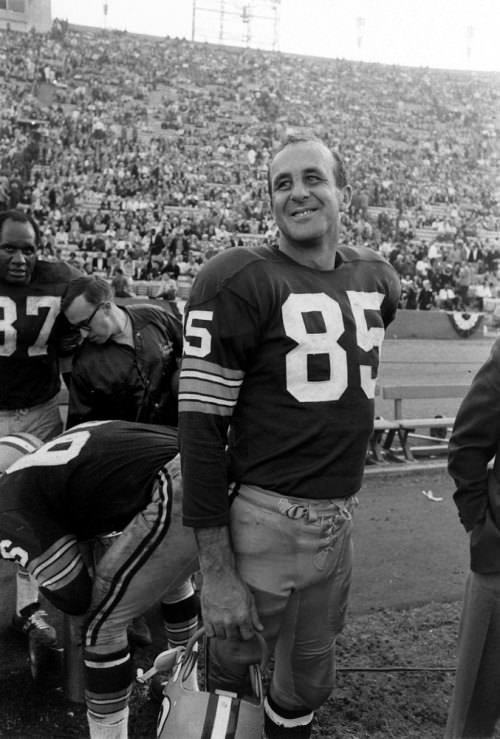
Max McGee stands on the sideline in his Green Bay uniform, jersey number 85 bright against the darker fabric, wearing the relaxed grin of a player who knows the moment is his. Behind him, the stadium rises in packed tiers, a dense backdrop of fans that hints at the scale of Super Bowl I without needing a single caption. The scene feels candid and immediate—more like a paused heartbeat than a posed portrait.
Details around the frame pull you into the working world of 1960s pro football: teammates moving through pregame or in-game routines, a bench area close at hand, and the scuffed, practical look of the gear. McGee’s posture is loose, almost conversational, which makes the photograph read like a slice of sideline life rather than a hero shot. That grounded authenticity is exactly what makes vintage NFL photography so searchable and so compelling for fans and historians alike.
The title’s stat line—seven receptions, 138 yards, two touchdowns—adds a layer of legend to the everyday realism on display, tying a human expression to a game that helped define the Super Bowl era. For anyone exploring Green Bay Packers history, early championship football, or iconic wide receiver performances, this image offers an evocative doorway into the sport’s first big stage. It’s a reminder that historic numbers begin as ordinary moments: a breath, a smile, and the roar of a crowd just out of focus.