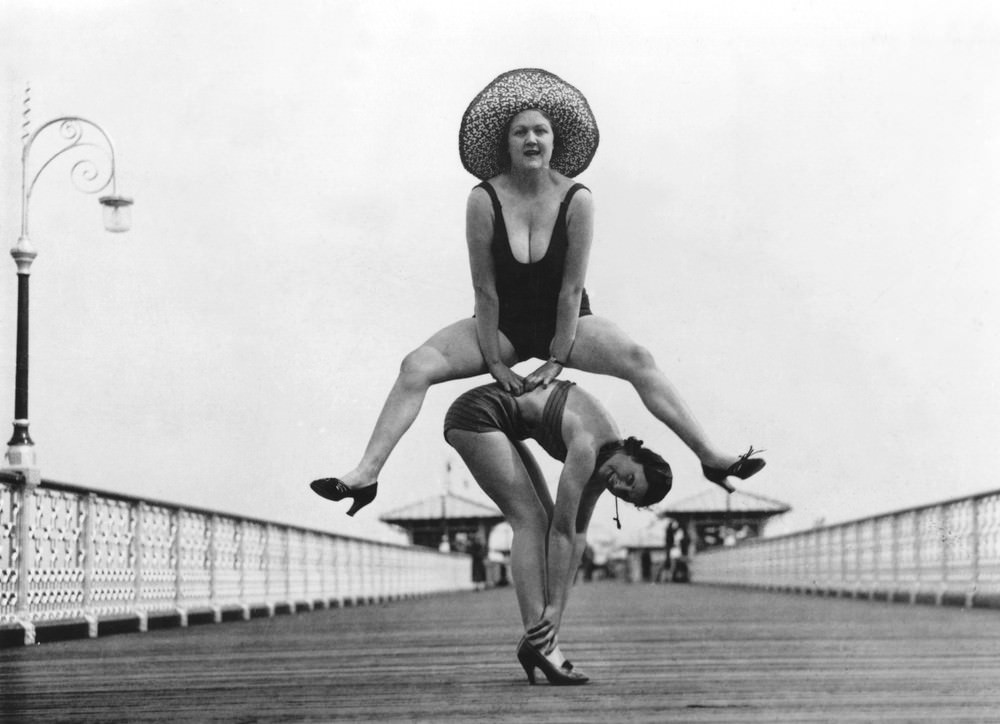
Midway along Llandudno’s pier on 16th August 1935, two holidaymakers turn the broad wooden boards into a playful stage, caught in the middle of a leap-frog that feels both daring and carefree. The jumper, balancing in heels and a wide-brimmed sunhat, hangs for a moment in the air with legs flung wide, while her partner bends forward to offer a human hurdle. Framed by the pier’s railings and distant pavilion, the scene draws the eye straight down the promenade like a snapshot of summer momentum.
There’s plenty to read in the details: practical swimwear that still nods to modesty, confident posture, and the easy humour of seaside companionship. The clean lines of the pier and a lone lamp standard at the edge add a touch of everyday architecture, reminding us that seaside resorts were built for strolling, seeing, and being seen. Together, the fashion, the setting, and the spontaneous sport capture how British holidays could mix relaxation with impromptu games long before the age of organised beach fitness.
As a piece of 1930s social history, this photograph is more than a novelty image of people playing leapfrog; it’s a vivid record of leisure culture in interwar Wales. The pier becomes a public playground where adults reclaim childhood games, and the camera preserves that brief, weightless instant. For anyone interested in Llandudno history, vintage seaside photography, or the texture of everyday life in 1935, it offers a memorable glimpse of summer fun on the boards.