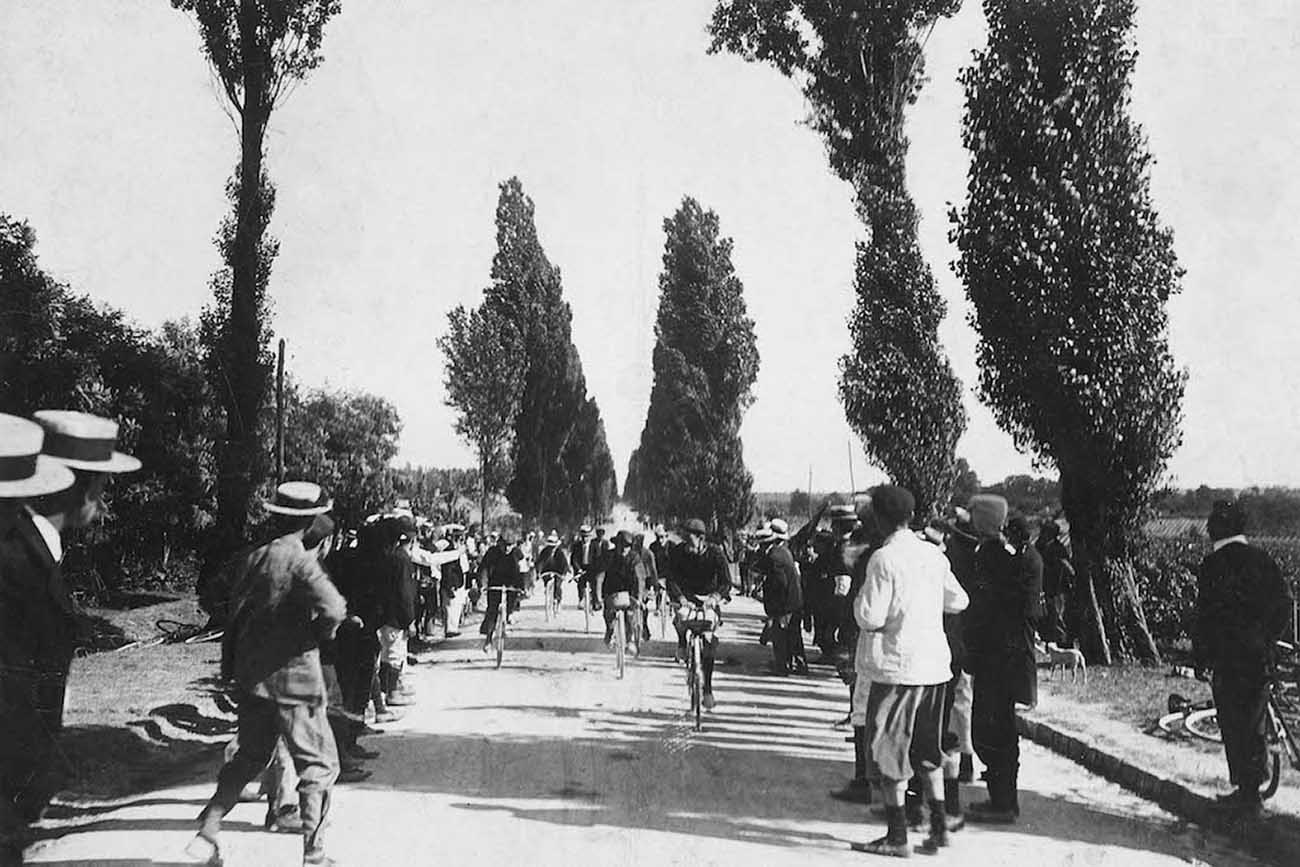
A long, straight road lined with tall trees becomes an impromptu stadium as spectators press in from both sides, hats tipped forward to follow the riders’ approach. The scene has the open, rural feel of early road racing—no barriers, no grandstands, just a corridor of faces and bicycles waiting for the decisive moment. In the distance, a small cluster of competitors pedals into view, framed by shadows and summer light.
Bordeaux is the finish named in the title, and the atmosphere here hints at why the first Tour de France quickly became a public obsession. The crowd’s closeness to the course speaks to a time when the race unfolded in everyday landscapes, where officials, onlookers, and cyclists shared the same narrow strip of road. You can almost sense the noise and dust that would have risen as wheels rolled over the surface and the sprint took shape.
History adds an extra charge to this particular arrival: it marked the first-ever foreign winner of a Tour de France stage, the Swiss rider Charles Laeser. That detail turns a simple finish-line moment into a milestone in international sport, signaling how rapidly the Tour’s challenge—and its fame—reached beyond France. For readers exploring the 1903 Tour through historical photos, this image is a vivid reminder that cycling’s greatest race was global almost from the start.