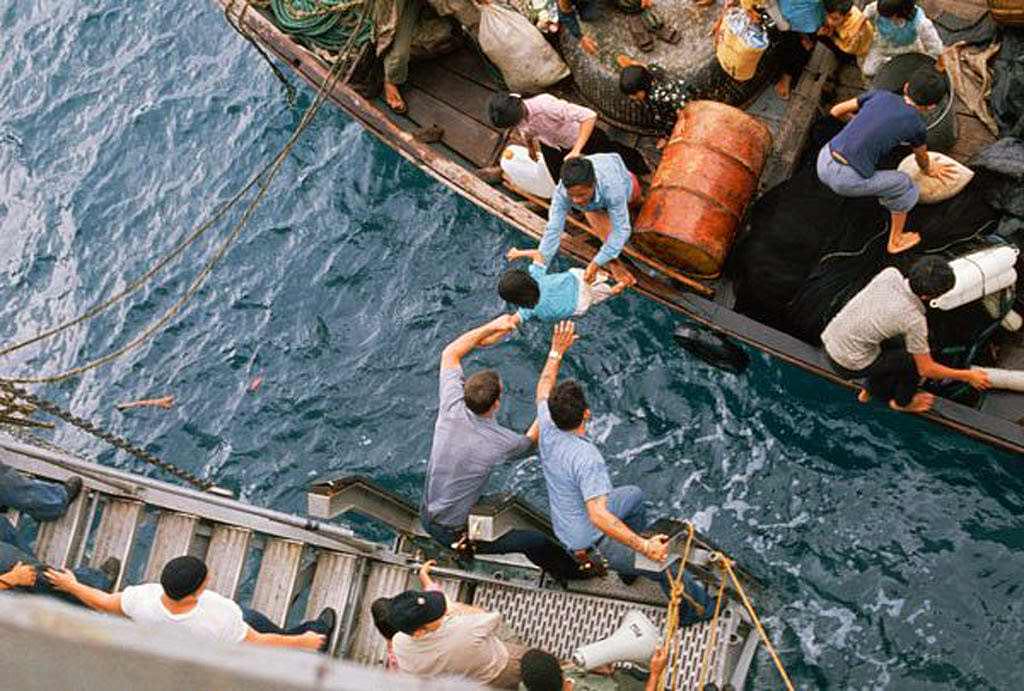
Ropes, churning blue water, and outstretched hands frame a tense moment alongside the U.S.S. Durham (LKA-114) as crewmen work to bring Vietnamese refugees aboard. The camera angle looks down into the narrow gap between ship and small craft, where balance and timing matter as much as strength. Faces are partly obscured by motion, but the urgency is unmistakable in the grasp of wrists and the quick, practiced stance of sailors leaning over the rail.
Below, the crowded boat tells its own story: bundled belongings, a fuel drum, and tightly packed passengers clinging to any stable surface. The contrast between naval order—uniformed crew, rigging, and the ship’s metal steps—and the improvised reality of flight at sea is stark. In the Vietnam War era, scenes like this became emblematic of last-minute evacuations and the perilous journeys that followed, when survival depended on contact with larger vessels willing to take people in.
For readers searching the history of Vietnamese refugees, U.S. Navy humanitarian actions, and the wider legacy of the Vietnam War, this photo offers a clear, human-scale view of rescue at sea. It preserves the split-second decisions and physical labor that turned open water into a passage to safety. More than a record of a military ship’s mission, it is a reminder that naval operations often unfolded as acts of refuge as much as force.