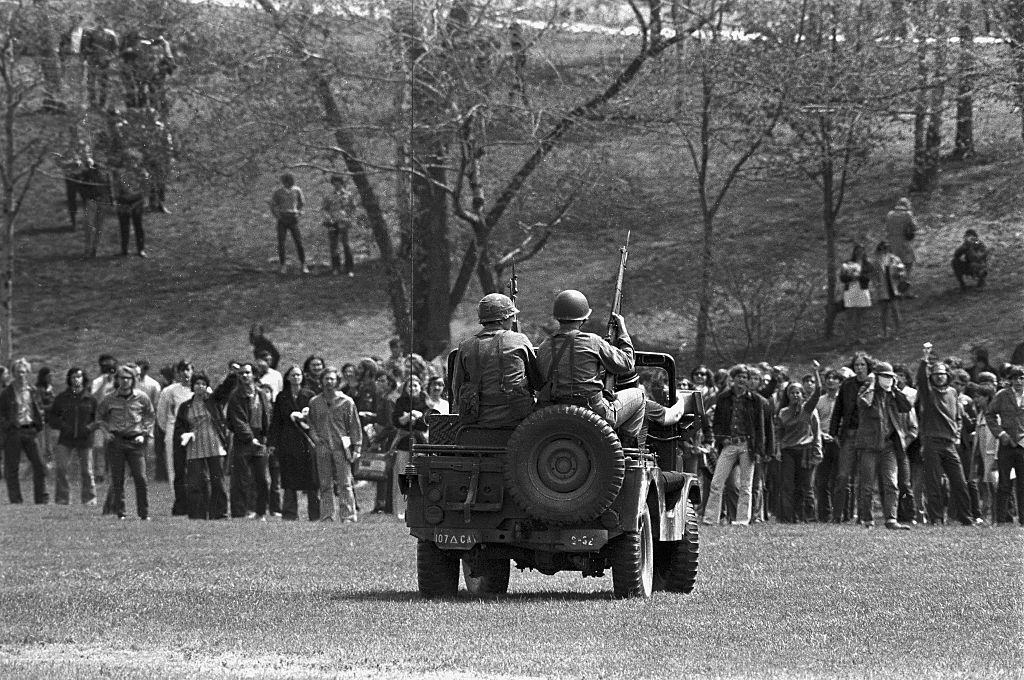
Two National Guardsmen ride in the back of a military jeep, rifles upright, facing a dense line of students and onlookers spread across an open campus lawn. Bare spring trees frame the background, and the crowd’s body language—hands raised, shoulders squared, faces turned toward the soldiers—signals a confrontation already in motion. The distance between the vehicle and the demonstrators feels both wide and perilously small, a stark visual measure of authority meeting dissent.
May 4th, 1970 at Kent State University has come to symbolize the domestic turbulence of the Vietnam War era, when protests over U.S. policy collided with armed enforcement. The title’s mention of masked National Guardsmen firing tear gas evokes the sensory reality behind the scene: drifting chemical clouds, stinging eyes, and the sudden scramble that can fracture a gathering into panic. In a single frame, the campus becomes a contested space where civic expression and military posture stand in direct opposition.
Photographs like this endure because they hold competing narratives at once—order and fear, protest and provocation, discipline and outrage—without resolving them. The jeep’s hard lines and the soldiers’ helmets contrast with the varied clothing and expressions of the demonstrators, underscoring how quickly ordinary student life was overtaken by crisis. As a historical image tied to the Kent State protests and the broader Vietnam War debate, it remains an essential document of how public conflict can erupt in places meant for learning.