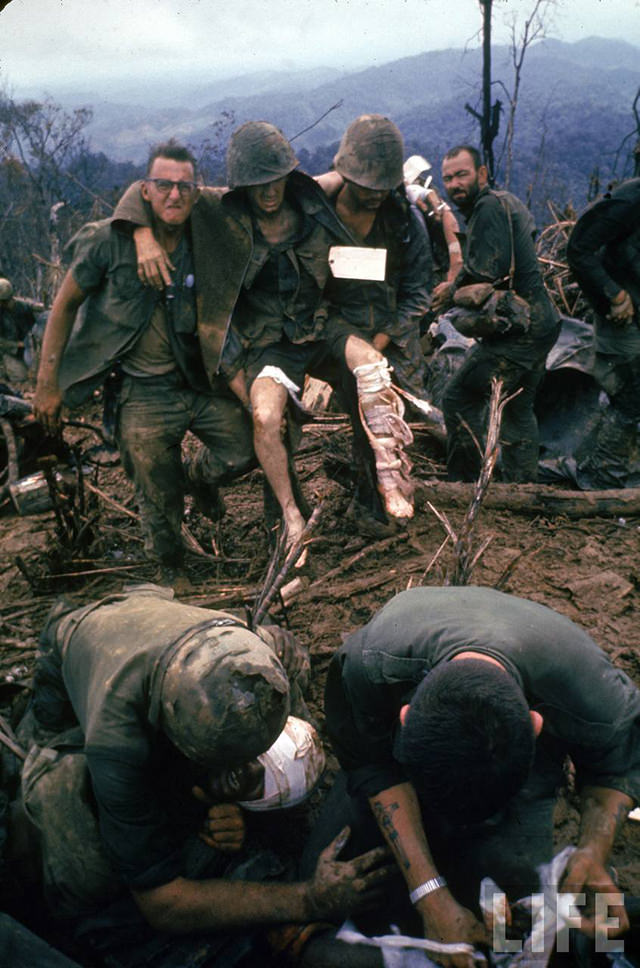
Mud clings to boots and fatigues as exhausted Marines shoulder the weight of a wounded comrade across a stripped, brush-strewn hillside. The injured man’s helmet sits low, his body slumped between two helpers, while makeshift bandages and a rigid splint on his leg speak to the urgency of battlefield medicine. Behind them, the hazy line of distant hills and the scarred vegetation suggest a landscape shaped as much by combat as by weather.
At ground level, other hands are already at work, crouched close and focused on stabilizing another casualty amid scattered gear and churned earth. The scene is crowded but purposeful: triage in the open, where every movement—tightening a wrap, checking a limb, steadying a shoulder—can mean the difference between survival and loss. Faces show strain and concentration rather than drama, a reminder that evacuation begins long before a helicopter or vehicle arrives.
For readers exploring Vietnam War history, this photograph underscores a crucial truth of the conflict: endurance was measured not only in firefights, but in the relentless labor of rescuing, treating, and carrying the wounded under harsh conditions. It also highlights the bond that formed in such moments, when Marines became stretcher-bearers, medics, and protectors in the same breath. As a historical photo document, it brings the realities of combat casualty care and evacuation into sharp, human focus.