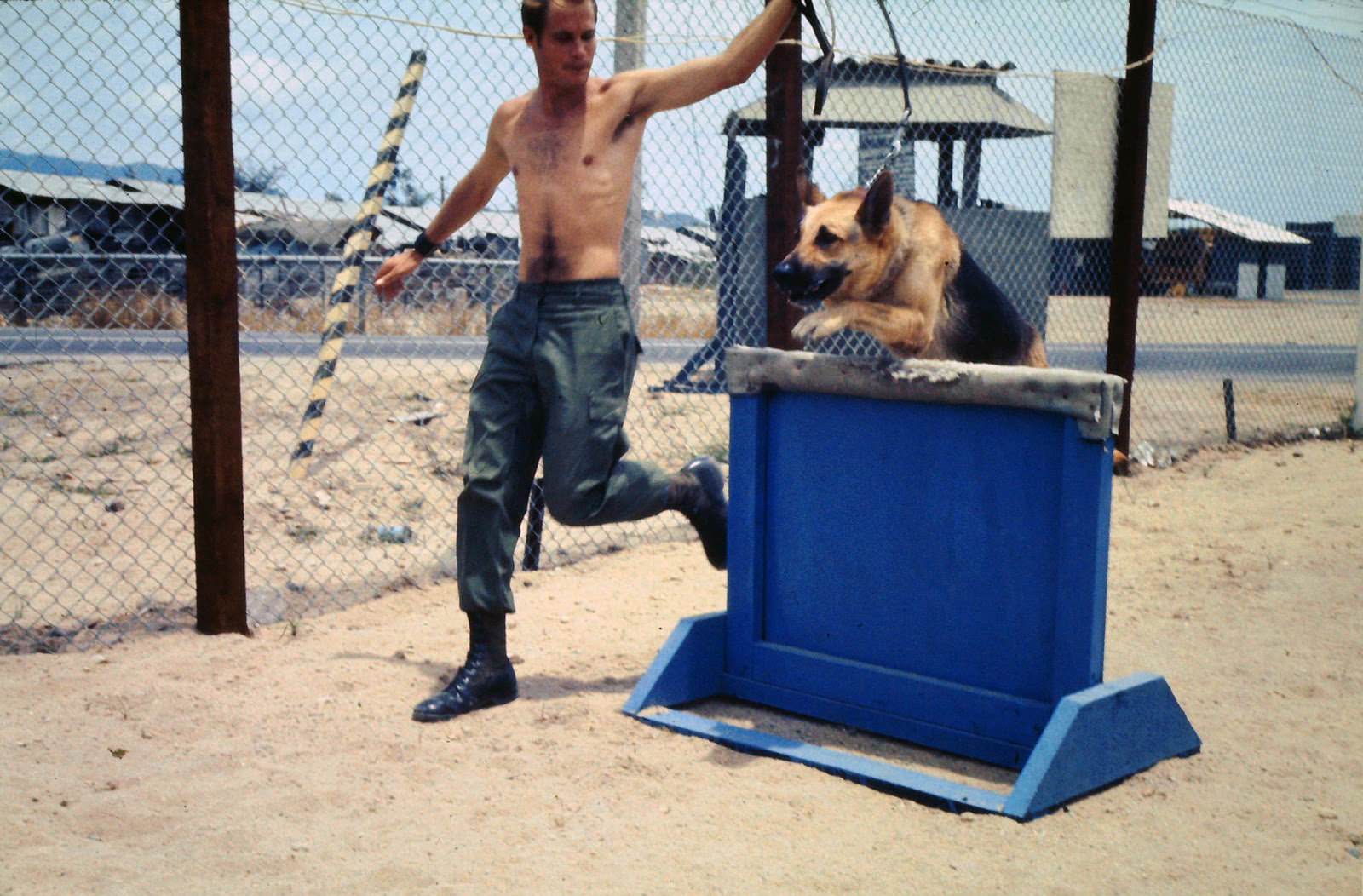
Bare-chested in the heat and moving at a sprint, Brian Mowatt guides Prince through an exercise course at the Army sentry dog kennels in Nha Trang, Vietnam. The moment is all motion: the handler’s arm extended to direct, the German Shepherd launching cleanly over a blue obstacle, sand kicked up under boots and paws. Behind the chain-link fence and utilitarian structures, the setting feels unmistakably military—controlled, improvised, and built for repetition.
Working dogs were a vital, often overlooked piece of Vietnam War base security, trained for alertness, obedience, and confidence under stress. An exercise course like this wasn’t a spectacle so much as a daily routine, designed to sharpen the partnership between soldier and dog until it became instinct. The photograph’s color and candid immediacy underline that this was hands-on work, where trust was earned in sweat and split-second cues rather than ceremony.
Nha Trang’s sentry dog kennels represent a side of the conflict that rarely makes the headlines: the quiet labor of deterrence, patrol, and protection around perimeters and installations. Prince’s leap freezes a brief, upbeat beat of training amid a war defined by uncertainty, reminding viewers how much depended on discipline and teamwork at ground level. For readers exploring Vietnam War history, military working dogs, or U.S. Army training practices, this image offers a vivid window into the routines that kept watch when the rest of the base slept.