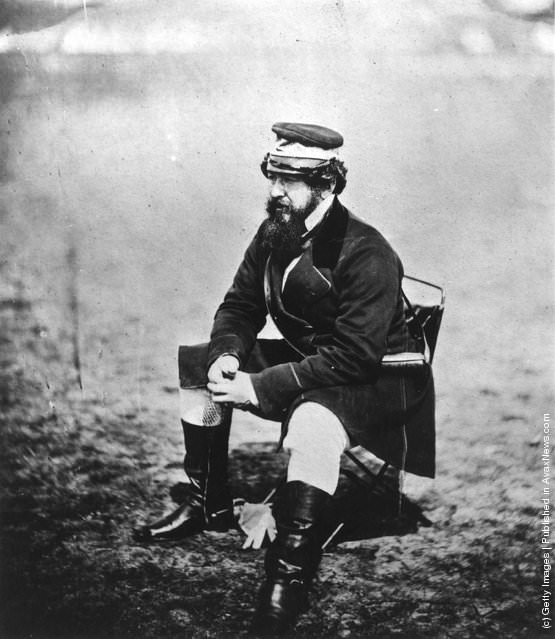
Seated outdoors in travel-worn clothing and a peaked cap, Sir William Howard Russell meets the camera with the steady, appraising look of a man accustomed to watching history unfold at close range. The simple chair, the open ground behind him, and the practical boots and coat all hint at movement and hardship rather than drawing-room comfort. It’s a quiet portrait, yet it carries the atmosphere of the field—where news was gathered not from dispatches but from dust, distance, and difficult decisions.
Russell is remembered as the celebrated war correspondent of “The Times,” and the 1850s marked a formative period for modern war reporting. Working in an era when photography was still emerging and communication was slow, correspondents relied on sharp observation and vivid prose to bring the realities of conflict to readers at home. His reputation rests on a willingness to describe what others preferred to soften, helping shape public discussion about military leadership, logistics, and the human cost of campaigns.
For readers exploring Wars & Military history, this historical photo offers more than a likeness—it suggests the profession’s turning point, when journalism began insisting on firsthand truth from the battlefield. The portrait’s understated composition keeps attention on the correspondent himself: a civilian voice standing near the machinery of war, tasked with translating experience into narrative. Whether you’re researching Victorian-era newspapers, the evolution of foreign correspondence, or the origins of conflict reporting, Russell’s image is a compelling doorway into the 19th-century press and its growing influence.