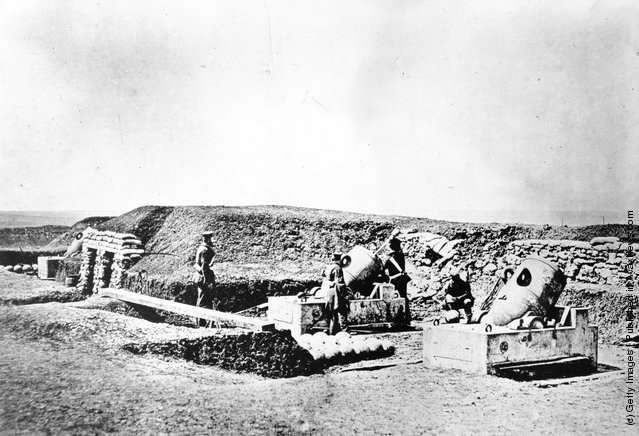
Earthen ramparts rise low against a pale sky, turning the landscape into a purpose-built fortress where everything seems shaped by spade and urgency. In front of Picquet House with the Light Division, heavy mortar batteries sit in stout wooden beds, their squat barrels angled upward for high, plunging fire. The scene feels stark and practical—no parade-ground polish, just the hard geometry of siege warfare during the Crimean War in the 1850s.
Along the trench line, soldiers stand and crouch near stacks of ammunition and rough timbers, dwarfed by the ordnance they tend. The emplacements are carved into the ground, with sandbags and piled earth forming protective lips that hint at constant threat from counter-battery fire. Even at a distance, the arrangement suggests a carefully organized battery position: weapons spaced, supplies close, and cover always within a few steps.
Viewed today, the photograph functions as more than a military curiosity; it is a document of how industrial firepower met traditional fieldworks in a campaign defined by sieges and endurance. Details like the dugout shelter, the uneven berms, and the clustered mortars help convey daily life at the front—waiting, preparing, and maintaining weapons under harsh conditions. For readers interested in Crimean War history, Light Division fortifications, and nineteenth-century artillery, this image offers a grounded look at the mechanics behind the headlines of battle.