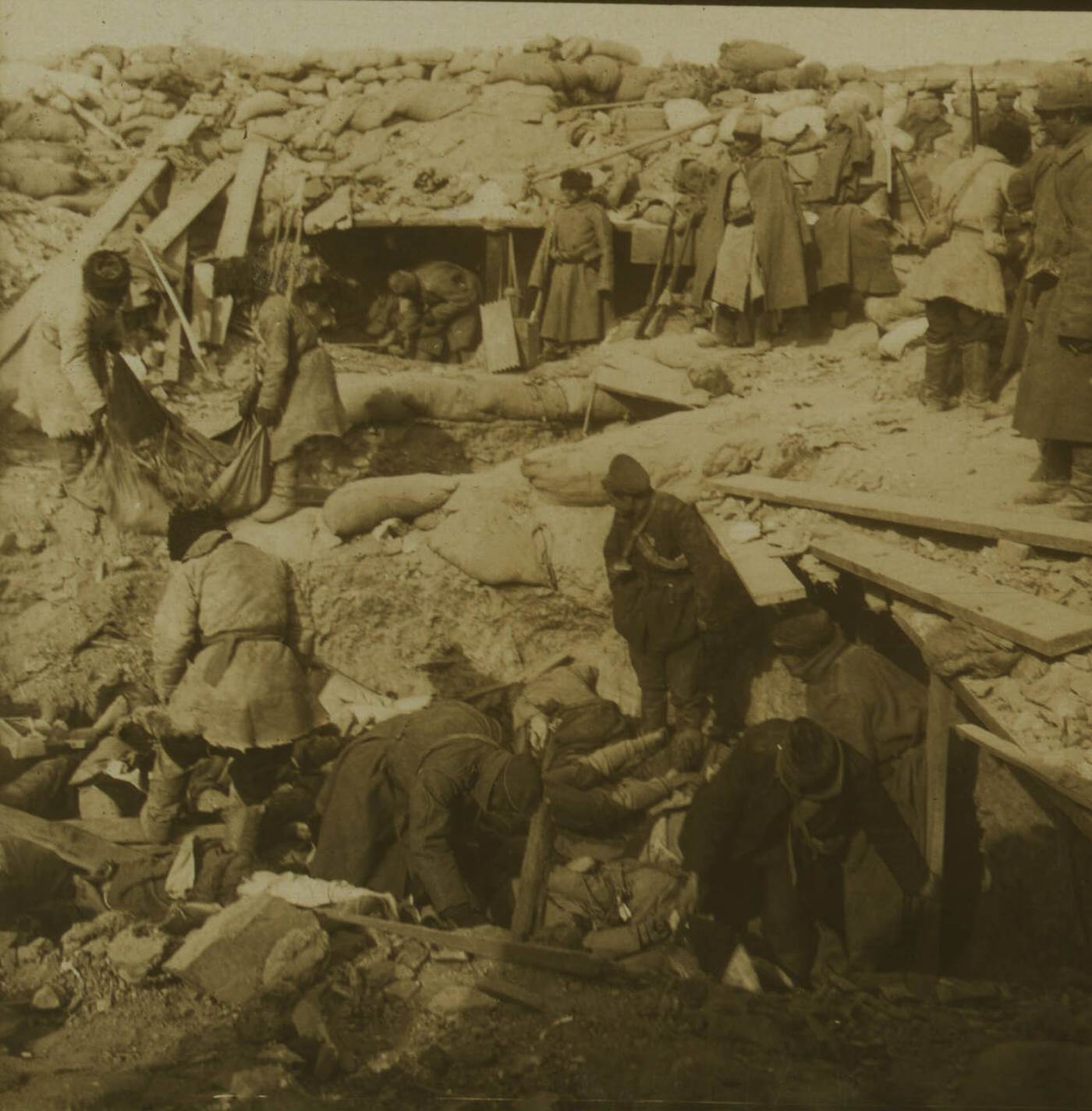
Beneath a low roof of sandbags and splintered timbers, a crowded fortification turns into a worksite of grim necessity. Men in heavy coats gather along the trench line, some standing guard with rifles while others bend to the hard labor at their feet, framed by the rough geometry of dugouts and collapsed earth. The scene is cluttered with boards, debris, and makeshift supports, suggesting how quickly a defensive position could become a ruin under sustained attack.
The title’s stark claim—Japanese buried by Russians inside a fort in Port Arthur, where every man entering was killed by bayonet—casts the photograph in the shadow of close-quarters fighting. With artillery and entrenchments forcing enemies into narrow chokepoints, the bayonet becomes a weapon of last yards rather than long ranges, and the aftermath must be handled where it falls. What lingers here is not triumph but the discipline of occupation: securing the position, managing the dead, and restoring order amid destruction.
For readers searching the Russo-Japanese War, the Siege of Port Arthur, and the brutal realities of trench warfare, this image offers an unfiltered look at how forts were fought over and then cleaned out. The bodies in the foreground and the concentrated labor around the dugout speak to the human cost behind strategic maps and campaign summaries. It is a reminder that “capturing a fort” often meant fighting in the dark of cramped passages—and then confronting what remained when the firing stopped.