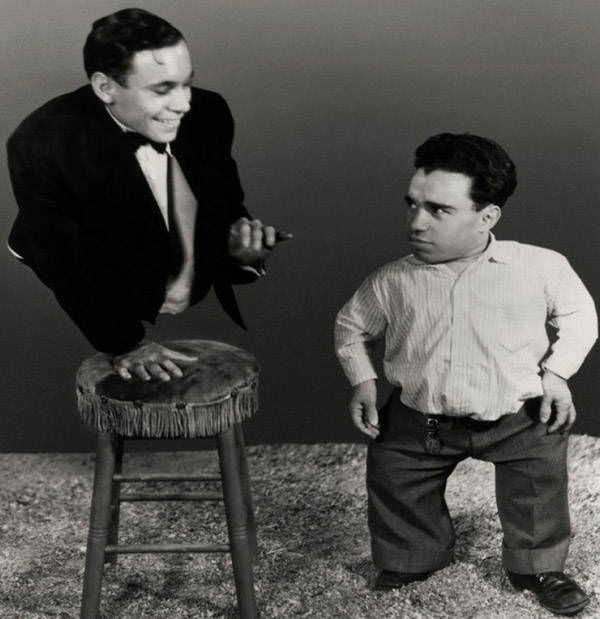
Leaning in with a mischievous grin, Johnny Eck turns a plain studio setup into something charged with personality, his hands braced on a stool as if he’s about to spring into a joke. Beside him stands Angelo Rossitto, dressed neatly and watching with a guarded, almost skeptical expression that plays perfectly against Eck’s buoyant energy. The uncluttered backdrop and crisp lighting keep the focus on faces, posture, and the subtle theatricality of a posed production still from *Freaks* (1932).
The title’s stark fact—Eck being born without the lower half of his torso—lands differently when you see how confidently he occupies the frame. Rather than reducing him to a medical curiosity, the photograph highlights performance and presence: a moment of interaction, not simply display. Rossitto’s stance and Eck’s animated lean suggest a staged beat from the film, a reminder that early cinema often blurred the line between character, spectacle, and the lived realities of its cast.
For readers interested in classic Hollywood history, *Freaks* remains a lightning rod, discussed as much for its controversial reputation as for its unusual casting and enduring cultural impact. Images like this offer a more intimate way to approach the movie—through the textures of costume, the choreography of bodies in space, and the actors’ expressions in mid-play. Whether you come for film noir-era aesthetics, pre-Code cinema, or the complicated history of sideshow representation on screen, this still invites a closer, more thoughtful look.