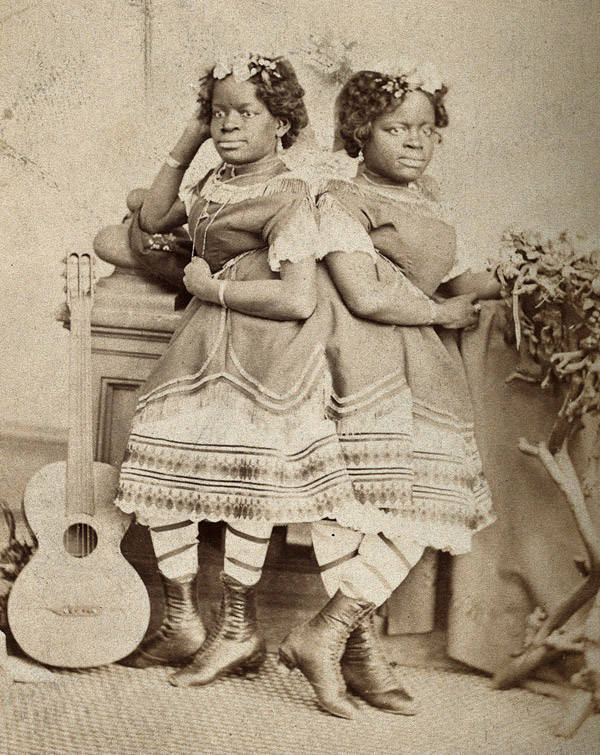
Poised in matching dresses and sturdy lace-up boots, Millie and Christine McCoy meet the camera with a calm, practiced composure. Their hair is carefully styled with small floral ornaments, and the studio setting—drapery, a patterned floor, and a hint of greenery—frames them like performers rather than curiosities. An acoustic guitar resting nearby quietly signals what the title emphasizes: music was central to how audiences were invited to see them.
Born into slavery and later exploited as a traveling “novelty act,” the twins’ story sits at the intersection of American slavery, Victorian entertainment, and the long history of sideshow culture. Photographs like this one were often part of publicity, crafted to sell tickets while projecting respectability and talent. Looking closely, the image becomes a document of performance and survival—how two young women were packaged for the public, yet still asserted a dignified presence within a system built to profit from their bodies.
For readers searching for Millie and Christine McCoy in 1871, conjoined twins history, or the roots of circus and sideshow promotion, this portrait offers a powerful starting point. It invites questions about consent, agency, and the economics of spectacle, while also preserving a rare visual record of Black performers navigating a world that demanded both entertainment and endurance. The tension between the softness of the studio staging and the hardness of their lived reality is what makes the photograph linger long after the first glance.