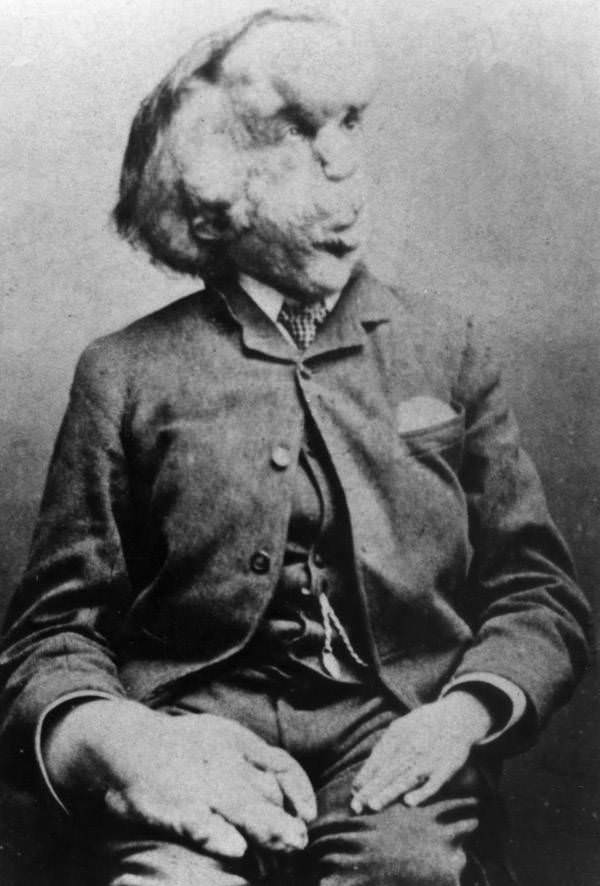
Seen in profile and dressed in a neat Victorian suit, Joseph Merrick sits for a stark studio portrait that has become inseparable from the cruel nickname “the Elephant Man.” The formal jacket, high collar, and carefully arranged pose suggest an attempt at ordinary respectability, yet the camera lingers on the severe facial disfigurement that made him a spectacle to strangers. Even in this grainy historical photo, the contrast between dignity and exploitation is impossible to ignore.
In 1889, Merrick’s life was shaped by rejection and the brutal economics of survival, pushing him into the world of touring “freak show” exhibitions. Such acts marketed human difference as entertainment, turning bodies into tickets and pain into profit, while audiences consumed the show without needing to know the person beneath the label. The portrait’s plain background and directness echo that era’s mix of curiosity, judgment, and uneasy fascination.
Today, this image invites a different kind of attention—one that looks past sensational stories and toward the lived experience of a man navigating disability, poverty, and public scrutiny. Readers searching for Joseph Merrick history, the Elephant Man 1889, or Victorian sideshow culture will find in this photograph a reminder of how easily compassion can be eclipsed by spectacle. Remembering Merrick means recognizing both the dehumanizing context that surrounded him and the quiet humanity he maintained in spite of it.