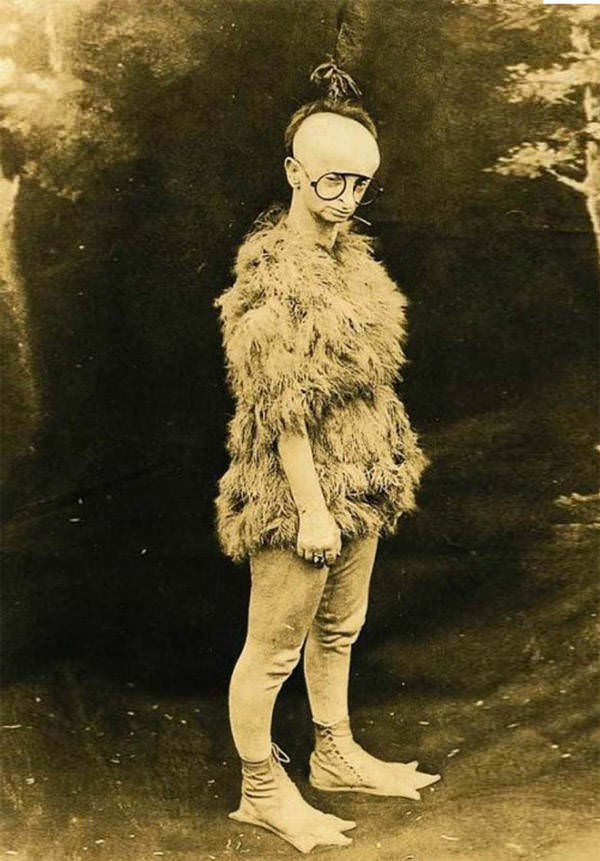
A lone performer stands against a painted studio backdrop, dressed in a shaggy, feather-like costume that turns her body into a living prop. Oversized round glasses and a small headpiece heighten the theatrical effect, while the long, pointed shoes and fitted stockings pull the eye down the frame. The pose feels both staged and intimate—an arranged moment meant to be looked at, judged, and remembered.
Known in sideshow history as Minnie Woolsey, “Koo-Koo the Bird Girl,” she was billed for an appearance that leaned heavily on novelty and exaggeration. The title notes that she suffered from Seckel syndrome, a condition associated with distinctive physical traits and developmental challenges, details that were often exploited by the entertainment industry of the era. In photographs like this, costume and styling do more than create a character; they reveal how disability was packaged for popular consumption.
For modern readers searching the story behind Koo-Koo the Bird Girl, this portrait invites a careful, human-centered look at what the camera doesn’t say. The worn texture of the outfit, the deliberate lighting, and the faux-natural background all point to a commercial image made to sell a persona rather than a full life. Seen today, it becomes a stark artifact of sideshow culture—one that raises questions about agency, spectacle, and the complicated legacy of performers with disabilities.