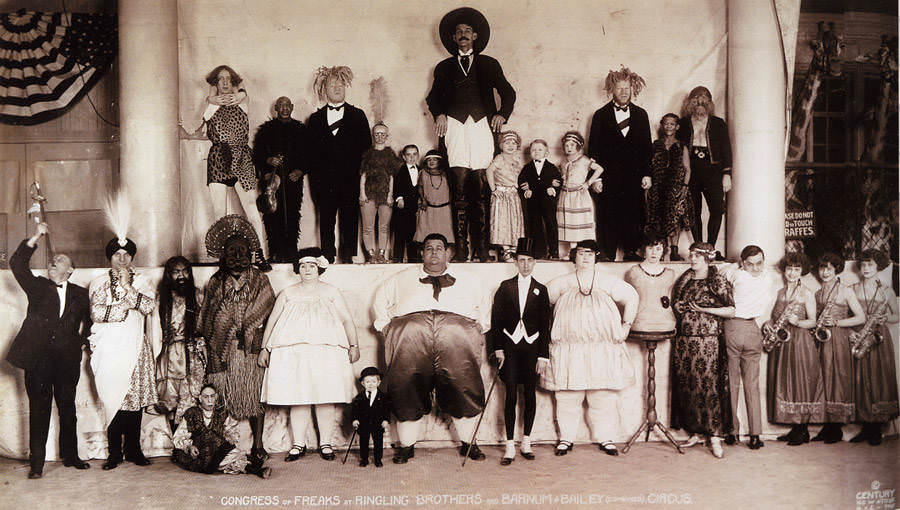
Staged beneath a grand proscenium and flanked by draped fabric, this 1924 group portrait brings together members of the Ringling Brothers’ “Congress of Freaks” lineup in a carefully arranged tableau. Performers stand in tiers, some elevated on a platform, creating a theatrical sense of scale that a traveling circus understood better than anyone. The formal pose and even lighting suggest a promotional intent, meant to be read quickly by onlookers and remembered long after the show moved on.
Costuming does much of the storytelling: tuxedos and top hats appear alongside patterned dresses, turbans, wigs, and novelty outfits designed to signal character at a glance. Several people hold props, while others rely on posture and facial expression—serious, stoic, or faintly amused—to project their stage identities to the camera. At the far edges, hints of signage and backstage texture peek through, reminding us that this is both performance and business, staged spectacle and working life.
Looking at circus sideshow history through a modern lens can be complicated, since the language of “freaks” reflects an era’s commercialized fascination with difference. Yet photographs like this remain valuable primary sources for anyone researching Ringling Brothers circus culture, American entertainment in the 1920s, or the visual marketing of sideshows. Seen today, the portrait invites a slower read: not only of what the audience was meant to notice, but of the individuals behind the costumes and the world that framed them.