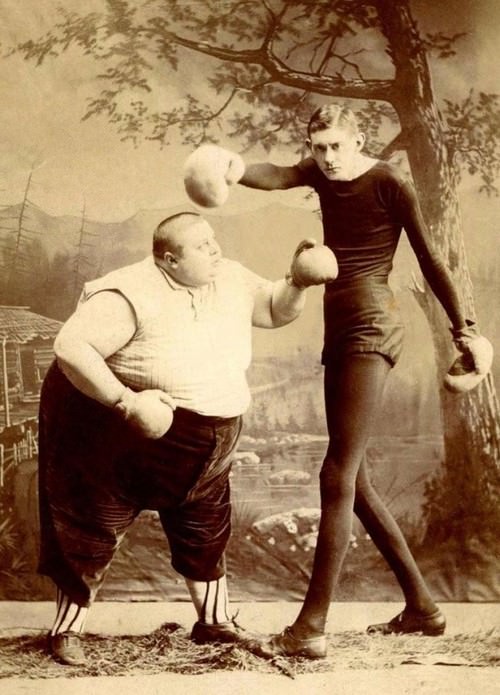
A staged boxing pose pits two sharply contrasted fighters against a painted outdoor backdrop, the kind of theatrical setting that immediately suggests a sideshow or touring act. One man stands extraordinarily tall and lean in a dark, form-fitting outfit, while his much shorter, heavyset counterpart squares up beside him; both wear oversized gloves that emphasize the spectacle as much as the sport. Their expressions are serious, but the composition leans into showmanship—an eye-catching clash designed to stop passersby and sell a story.
Sideshow boxing in the 1900s often lived in the blurry space between athletic contest and carnival attraction, where promoters relied on “oddity” pairings and exaggerated physiques to draw crowds. Photographs like this were practical advertising: simple, bold, and instantly readable even from a distance, turning bodies into branding. The studio-style scenery and carefully arranged stance hint at a performance meant to be repeated for audiences rather than a candid moment from a real bout.
For collectors of circus history, early boxing culture, and vaudeville-era entertainment, “Sideshow Boxers, 1900s” offers a vivid glimpse into how popular amusements were packaged and promoted. It also speaks to a period when boxing was both rough-and-ready sport and mainstream novelty, marketed through dramatic contrasts, costumes, and poster-ready poses. As a historical photo, it invites viewers to look past the initial oddity and consider the economics, tastes, and social attitudes that made such acts a thriving part of public life.