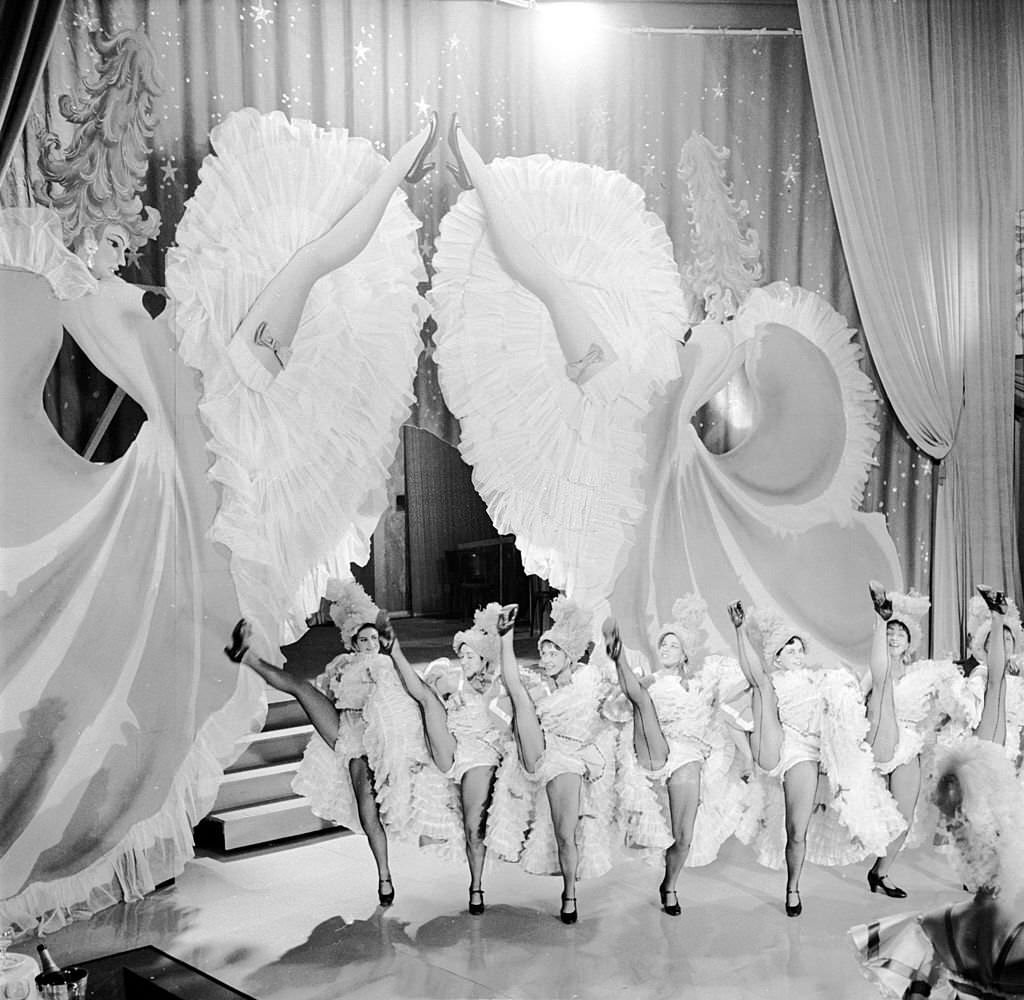
Feathered skirts erupt into twin white fans as dancers from Miss May’s troupe launch a French Cancan routine aboard a festival barge at the Bassin de la Villette in 1955. A line of performers snaps into synchronized high kicks, their stockings and heeled shoes forming a crisp rhythm against the stage floor while the choreography keeps time with the music just out of frame. The moment balances precision and exuberance—the cancan’s trademark blend of athleticism, spectacle, and cheeky flair.
Behind them, the set leans into theatrical fantasy: draped curtains, glittering star motifs, and oversized decorative figures that frame the dancers like a cabaret dream. The lighting washes the scene in bright contrast, turning ruffles into waves and making each lifted leg read like a bold graphic stroke. Even in a still photograph, the composition suggests motion, with the diagonal flare of skirts and the tightly packed chorus line pulling the viewer’s eye across the stage.
River festivals in mid-century Paris often mixed local celebration with popular entertainment, and this performance captures how nightlife traditions traveled beyond fixed venues into public, communal spaces. The French Cancan—long associated with music halls and revue culture—appears here as a portable symbol of postwar joie de vivre, ready for an audience gathered along the water. For historians of fashion and culture, the image is rich with detail: costume craftsmanship, performance conventions, and the enduring appeal of cabaret glamour in 1950s France.