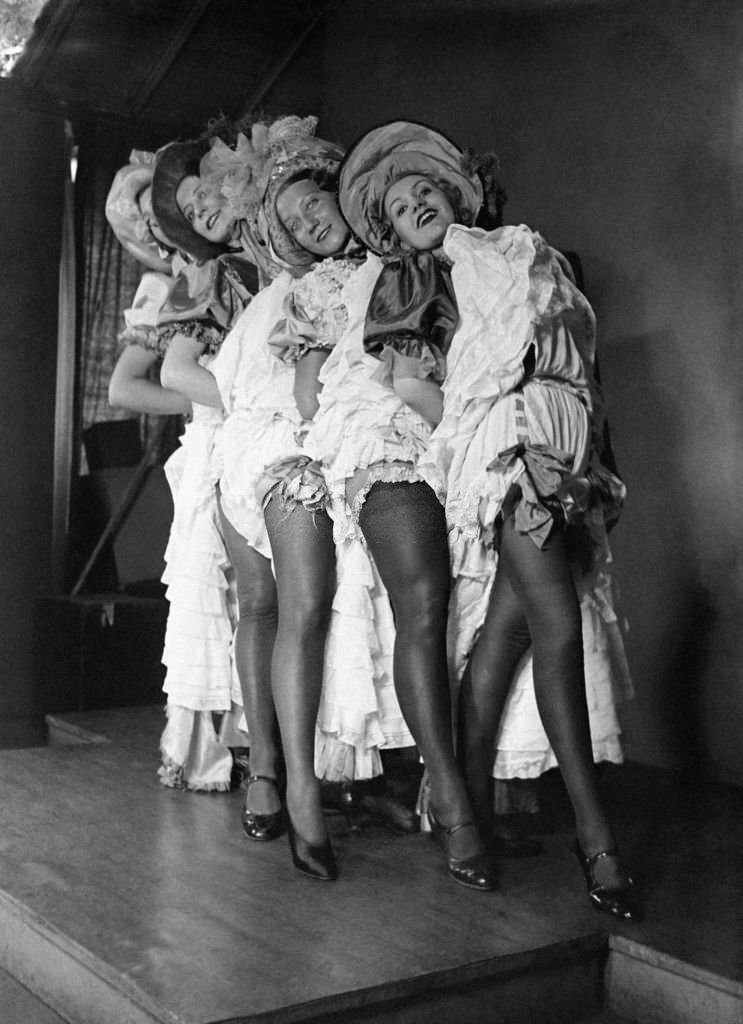
Leaning together in a playful diagonal, a trio of French cancan dancers pose at the edge of a cabaret stage in Paris in 1933, smiling as if caught between rehearsed bravado and backstage laughter. Their costumes billow with layered ruffles and lace, topped by oversized headpieces that frame their faces like theatrical halos. The low stage platform and dark curtains to the side hint at an intimate venue where proximity amplified every kick, twirl, and grin.
Ruffled skirts cascade to reveal dark stockings and polished shoes, the classic cancan silhouette built for movement and spectacle. The performers’ synchronized stance—hips angled, knees bent, shoulders tipped—suggests the physical discipline behind an act often remembered mainly for its exuberance. In the tight framing, fabric becomes choreography: pleats, bows, and flounces arranged to flutter dramatically under cabaret lights.
Parisian nightlife in the early 1930s traded on this blend of glamour and athleticism, and the photograph preserves that tension beautifully: coquettish presentation grounded in hard work. Cabaret culture marketed fantasy, yet it depended on real bodies trained to deliver precision at close range, night after night. For historians of fashion and popular entertainment, the image offers a vivid window into interwar stagewear, performance traditions, and the enduring allure of the cancan in French cultural memory.