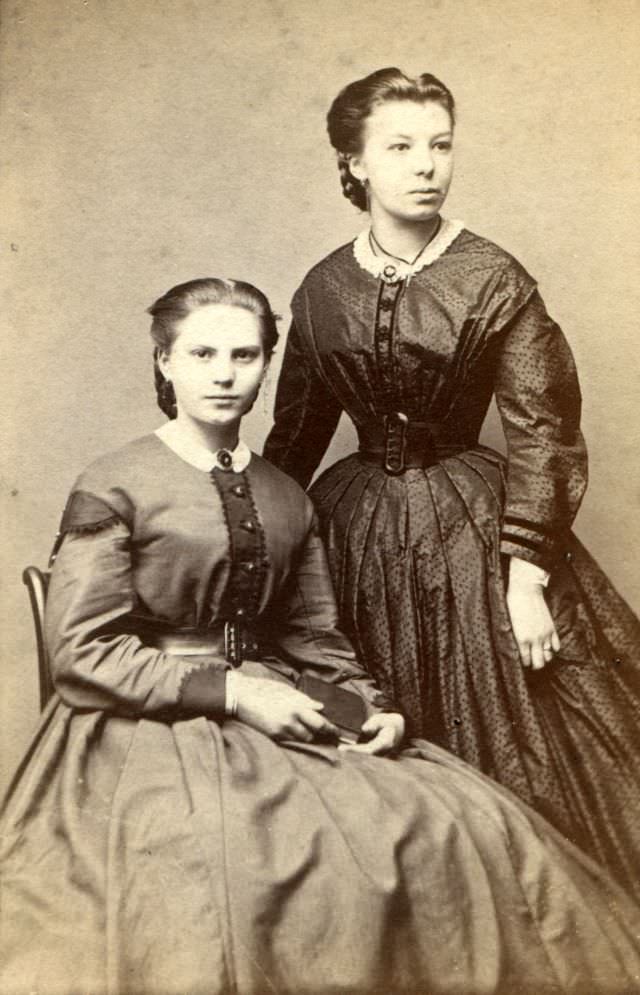
Two young Victorian women pose with practiced composure, one seated and one standing, their gazes turned slightly away from the lens as if caught between formality and private thought. Their hair is smoothed back and neatly arranged, and the plain studio backdrop keeps attention on silhouette, fabric, and posture. The seated figure’s hands rest quietly in her lap, while the standing figure’s stance reads confident, almost protective, beside her companion.
At the center of the portrait is the unmistakable shaping of the corset—an “indispensable undergarment” of late 19th-century fashion culture that defined the era’s coveted hourglass line. The fitted bodices, narrow waists, and structured skirts suggest careful layering: corsetry beneath, then bodice and skirt tailored to emphasize a controlled, vertical elegance. Buttons, belts, and crisp collars add to the disciplined look, turning everyday dress into a statement about refinement, respectability, and social expectation.
Beyond style, the photograph hints at what corsets meant in daily life: discipline and display, but also craft, modern consumer goods, and the constant negotiation between comfort and convention. These Victorian corset portraits were not merely about beauty; they recorded how women were expected to occupy space—upright, contained, and impeccably finished. For anyone exploring Victorian-era fashion, tight corsets, and women’s dress history, this image offers a vivid glimpse of the silhouettes and ideals that shaped late 19th-century visual culture.