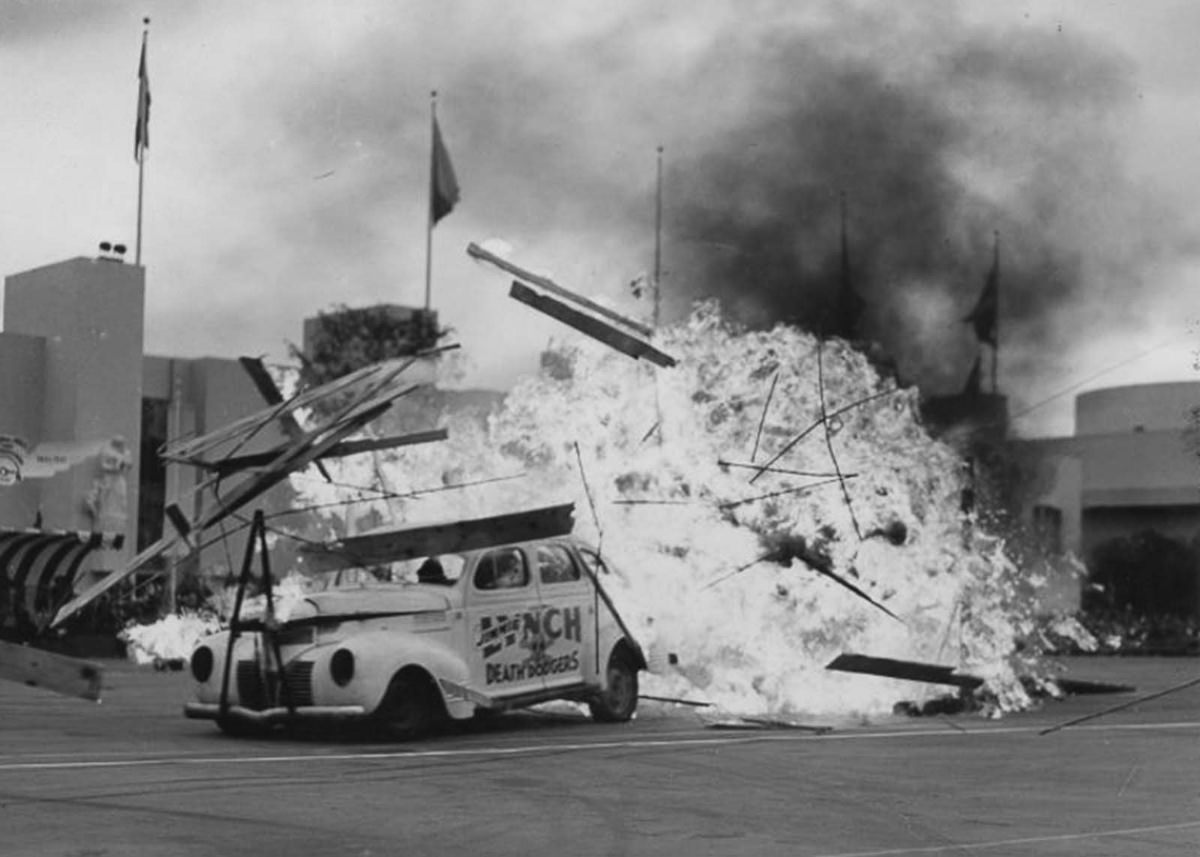
Flames billow across the arena floor as a stunt car labeled “Lynch Death Dodgers” skids through a moment of engineered chaos, framed by flags and grandstand structures in the background. Twisted panels and splintered debris arc through the air, while thick smoke rises behind the blast, turning the performance into a dramatic silhouette of speed and danger. Even without sound, the scene conveys the roar of engines, the crack of impact, and the crowd’s collective intake of breath.
Jimmie Lynch and his Death Dodgers were part of a mid-century entertainment tradition where motorsport met spectacle—crash-driving as a public show, staged to shock and thrill. The photo’s details suggest a carefully designed stunt: a compact sedan with reinforced front gear, a controlled collision point, and pyrotechnics timed for maximum visual punch. It’s a striking snapshot of 1940s sports culture, when daredevil driving exhibitions toured venues and sold adrenaline as family entertainment.
For historians of automotive history and vintage motorsports, images like this offer more than a dramatic accident; they reveal how risk was packaged, branded, and performed in an era captivated by machines. The “Death Dodgers” name on the door doubles as advertising and warning, a reminder that danger was central to the appeal. As a WordPress feature, this photograph invites readers to look past the fireball and consider the showmanship, technology, and public appetite that powered these unforgettable crash-car exhibitions.