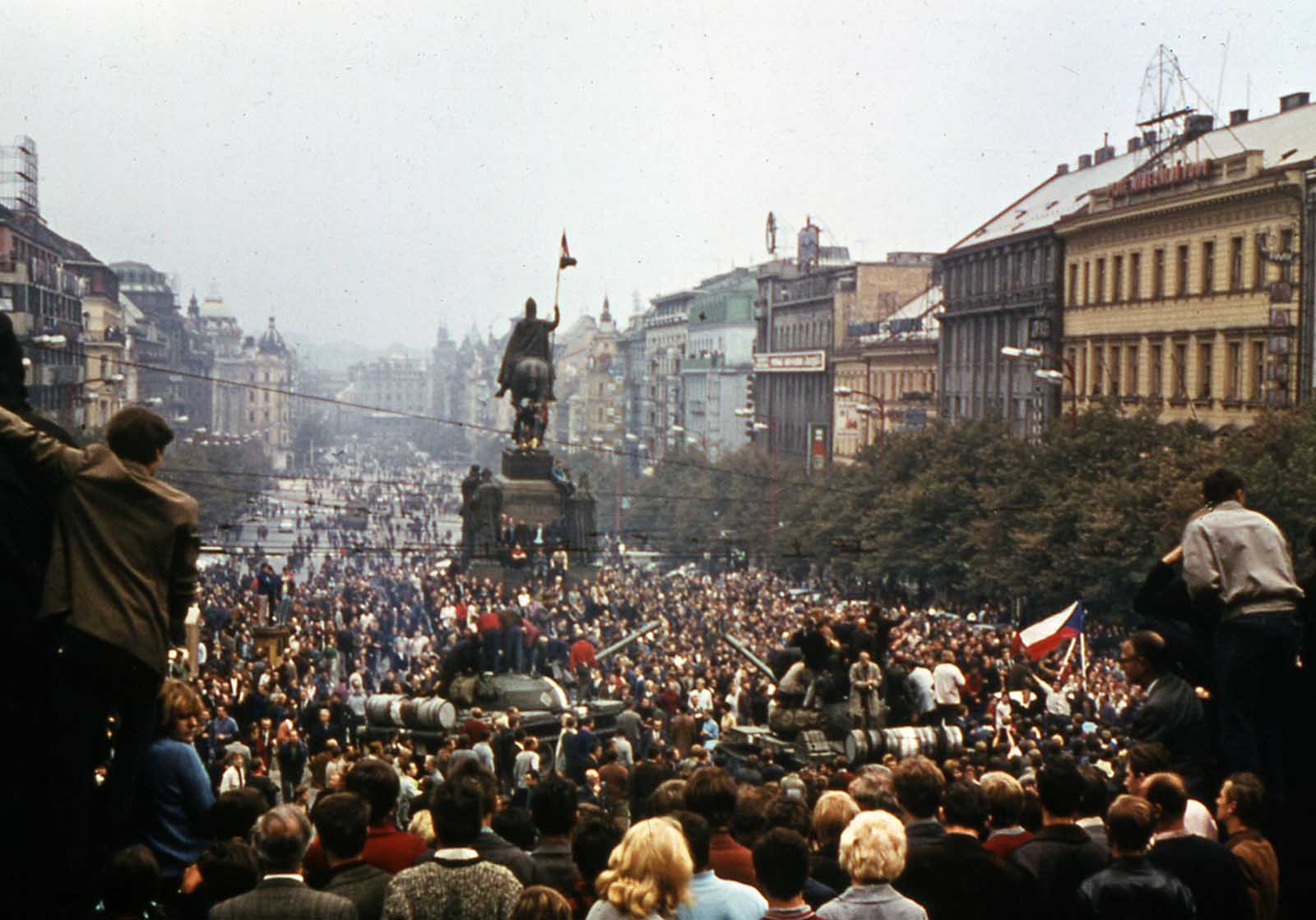
Wenceslas Square stretches into the distance beneath a pale sky, its broad boulevard packed shoulder to shoulder with people in downtown Prague. The statue at the center becomes a makeshift platform, and a small flag raised high draws the eye above a sea of heads. Along the edges, the city’s grand facades and streetlights frame the scene, turning an everyday commercial artery into a vast civic stage.
August 1968 brought the Soviet-led invasion of Czechoslovakia, and the crowd gathered here reads as both defiance and alarm. Protesters cluster around armored vehicles, some climbing onto them, transforming instruments of occupation into pedestals for public anger and urgent conversation. In a moment when words, banners, and presence mattered, sheer numbers became a message: Prague was watching, and Prague was resisting.
For readers searching the history of the Prague Spring, the Warsaw Pact invasion, and Cold War protest in Eastern Europe, this photograph offers a visceral entry point. It captures the texture of mass demonstration—faces turned toward the center, bodies pressing forward, and the city itself bearing witness as thousands claim the street. The result is not only a record of political crisis, but a reminder of how public squares can become the frontline of civil conflict without formal battle lines.